

Why This Matters More Than Ever
Teaching the Quran to one’s child is among the deepest hopes and spiritual aspirations of Muslim parents. It’s more than just religious instruction—it’s about planting a lifelong connection to Allah, nurturing identity, and anchoring values through divine words. For parents raising children with Down syndrome, however, this sacred dream often comes with a swirl of questions, uncertainties, and quiet worries. How will my child pronounce and memorize Arabic words if they struggle with speech clarity and language acquisition? What if their short-term memory limitations make long verse retention difficult? Will this journey add pressure and emotional strain—or can it be a source of joy, confidence, and barakah for both of us?
These are not just abstract concerns. They’re the lived, daily thoughts of families who are striving to offer their children everything—including a connection to the Quran. This article is not simply an instructional manual—it’s a compassionate companion for those parents and educators walking this unique path. It serves as both a map and a mirror: offering guidance grounded in research, while also reflecting the emotional and spiritual realities of raising a child with special needs.
Yes, children with Down syndrome can memorize the Quran. They can build deep, loving, and spiritually uplifting relationships with the words of Allah. But doing so requires a shift in approach—one that centers their learning needs, respects their neurological differences, and celebrates progress at every step. It demands a fusion of insights from developmental psychology, cognitive neuroscience, and Islamic educational philosophy to shape methods that actually work.
In this article, we draw from those very sources to offer a blend of evidence-based strategies and spiritual encouragement. By understanding how children with Down syndrome process information, how their memory functions, and what motivates their learning, we can create a nurturing environment where Quran memorization becomes not a burden, but a source of joy and connection. This guide exists so that no child is left behind in their access to the Quran—because every heart, regardless of ability, deserves to be lit by its light. [1]
Understanding Down Syndrome: More Than a Diagnosis
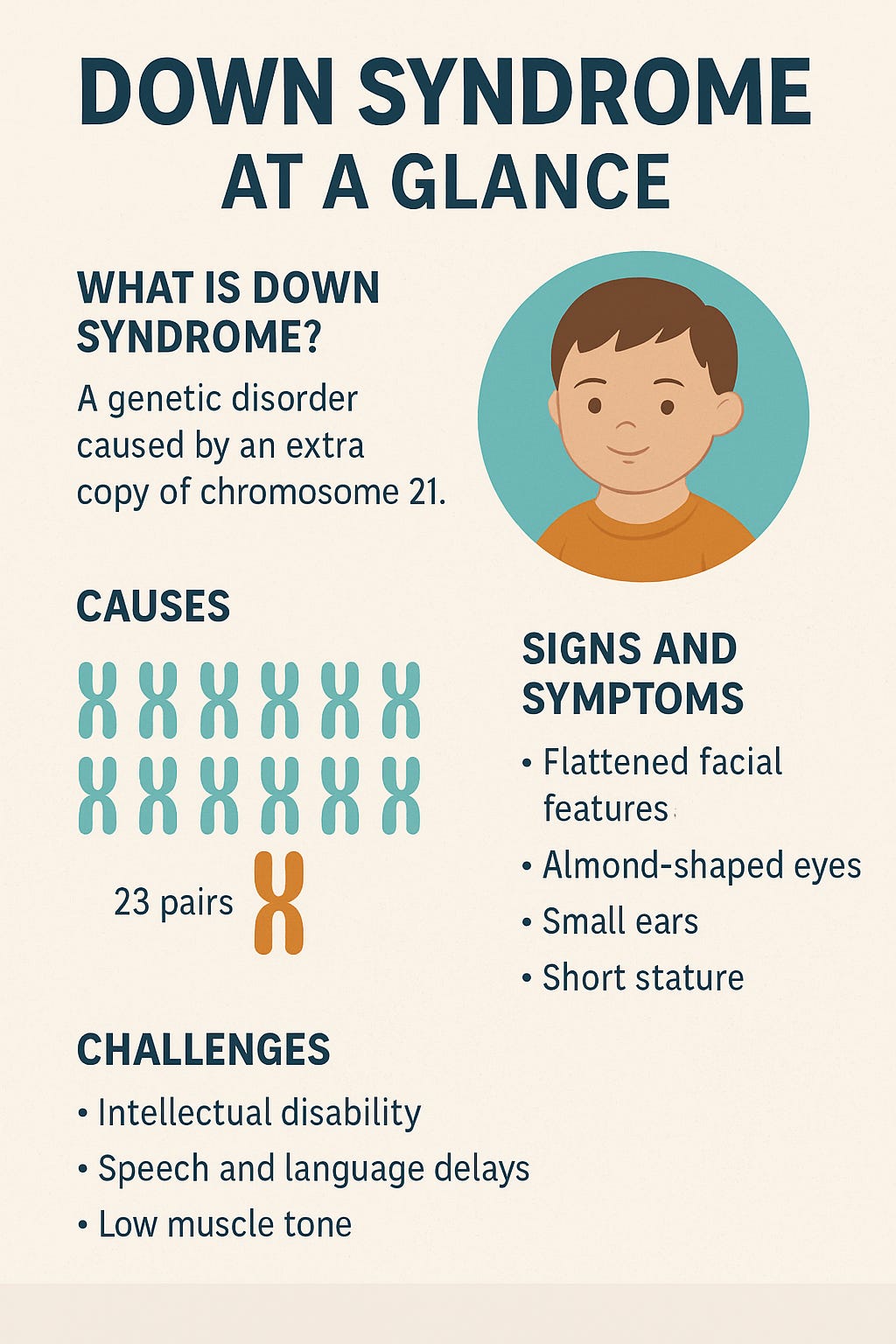
Down syndrome is a genetic condition that arises when a person has an extra full or partial copy of chromosome 21. This additional genetic material influences early brain development and leads to distinct physical traits, as well as a range of intellectual and developmental differences. Despite these variations, Down syndrome is not rare. It is, in fact, one of the most commonly occurring chromosomal conditions worldwide, affecting approximately 1 in every 700 live births [1].
It’s important to clarify that while Down syndrome is a genetic condition, it is not a disease. Children born with Down syndrome are not “sick”—they are not in need of curing, but of understanding. Their brains are simply wired differently, which influences how they absorb language, process information, and engage with the world around them. But perhaps the most vital truth is this: they are not defined by their diagnosis. They are children first—brimming with unique personalities, capable of deep love, learning, curiosity, and spiritual connection. Like every other child, they have the potential to seek Allah, to find joy in faith, and to flourish when nurtured with patience and belief.
Developmental and Cognitive Profile
From a cognitive standpoint, children with Down syndrome commonly experience mild to moderate intellectual disability. This often translates into noticeable delays in language development, particularly in expressive language—the ability to speak clearly and fluently—as well as in working memory, which is the brain’s capacity to hold and manipulate information for short periods. These specific challenges can make traditional Quran memorization methods, which rely heavily on auditory repetition and rote recall, less effective unless tailored to the child’s learning profile [2][3].
Yet within these challenges lie unique strengths that can be beautifully harnessed. For instance, while auditory memory may be weaker, visual memory is often a relative strength in children with Down syndrome. They tend to remember what they see better than what they hear. Additionally, many exhibit remarkable social warmth, emotional sensitivity, and a strong inclination toward routines—all of which can become powerful tools in the learning process. A child who thrives on consistency, enjoys meaningful one-on-one interaction, and connects emotionally with their teacher or parent may develop a deep and joyful bond with Quran learning—when the method fits the child.
There are also physical and neurological factors that may influence learning. Hypotonia, or low muscle tone, is common in children with Down syndrome and can impact the clarity of their speech and articulation of Arabic phonemes during recitation. They may also have shorter attention spans and slower processing speeds, meaning they need more time to take in, reflect on, and respond to information. These are not roadblocks. They are gentle indicators to shift the teaching approach—not to lower expectations, but to realign methods with how these children learn best.Diagnosis and Early Support
Down syndrome is usually diagnosed at birth or shortly thereafter through genetic testing. But developmental signs like delayed milestones, motor difficulties, and speech delays often emerge more clearly in early childhood. Parents who receive early intervention services—including speech therapy, occupational therapy, and individualized learning support—see far better long-term cognitive and social outcomes. In the context of Quran learning, these interventions lay the foundation for communication and attention—skills crucial to memorization and comprehension.
The Hidden Learning Obstacles: Why Traditional Methods Fall Short
Standard methods of Quran memorization are traditionally centered around listening to a teacher or audio recitation, repeating verses aloud, and achieving precise articulation of the Arabic text. These tasks demand a significant amount of cognitive coordination—strong auditory processing, sustained attention, verbal memory, and fine-tuned articulation. Even for neurotypical children, these demands can be intense. For children with Down syndrome, however, the conventional approach may place an even heavier cognitive load, especially in areas where they are known to face challenges.
Specifically, auditory processing—the brain's ability to make sense of what it hears in real time—can be slower or less efficient in children with Down syndrome. This can make it difficult to follow rapid recitations or accurately imitate sounds that they do not yet fully comprehend. Without thoughtful adaptations, these hurdles can lead to frustration or disengagement. But when parents and teachers acknowledge these limitations and intentionally reduce the auditory burden—by slowing down the pace, incorporating visual supports, and breaking verses into smaller, manageable chunks—Quran memorization can become not only possible, but enjoyable and deeply meaningful for the child.
Auditory Working Memory
One of the most significant cognitive hurdles faced by children with Down syndrome is a limited short-term auditory memory [4]. This refers to the brain’s ability to temporarily hold and recall information that has just been heard. In practical terms, it means that a child may struggle to retain a sentence or even a few words after hearing them once or twice—especially if those words are abstract, unfamiliar, or presented without visual or contextual cues.
In the context of Quran memorization, this challenge becomes especially pronounced. Traditional memorization often relies on auditory exposure—listening to a verse and immediately repeating it. For a child with poor auditory memory, this process can feel like trying to catch raindrops in a sieve: the information flows in, but it slips away before it can be grasped, processed, and stored. Without reinforcement through visuals, tactile experiences, or repetition tied to emotion and meaning, the verse may not stick. This is why relying solely on auditory methods often leads to frustration—not because the child isn’t trying, but because the method doesn’t match how their brain best absorbs and retains information.
Speech and Articulation Challenges
Many children with Down syndrome face structural and muscular differences in the mouth area that directly affect speech. These include a smaller oral cavity, a relatively larger tongue, and hypotonia (low muscle tone) around the lips, cheeks, and jaw. Together, these factors can make clear pronunciation more difficult, especially for sounds that require tight control of the mouth or throat muscles. In Arabic, this poses a unique challenge: many letters rely on precise articulation points (makhārij), including sounds produced deep in the throat or with subtle tongue placements that are not present in other languages.
These physical speech difficulties, however, should never be confused with a lack of comprehension. A child might clearly recognize a word in their mind, know its meaning, and even connect to it emotionally—but still struggle to say it correctly. It’s important to remember that the barrier is physical, not intellectual or spiritual. That’s why corrections must be approached with gentleness, patience, and encouragement. Harsh correction or visible frustration from the teacher or parent can discourage the child, making them feel as though they’ve failed when in fact they’re working incredibly hard. Progress may be slower, and articulation may remain imperfect—but what matters most is the sincerity of the effort and the joy of connecting with the words of Allah.
Processing Speed and Attention
Children with Down syndrome often experience slower cognitive processing speeds, which means they may need more time to absorb information, make sense of it, and then respond. This isn’t a sign of disinterest or inability—it’s simply the brain’s natural rhythm for them. When you combine this slower processing with shorter attention spans, it becomes clear why long, lecture-style or abstract Quran lessons can quickly become overwhelming or disengaging for the child.
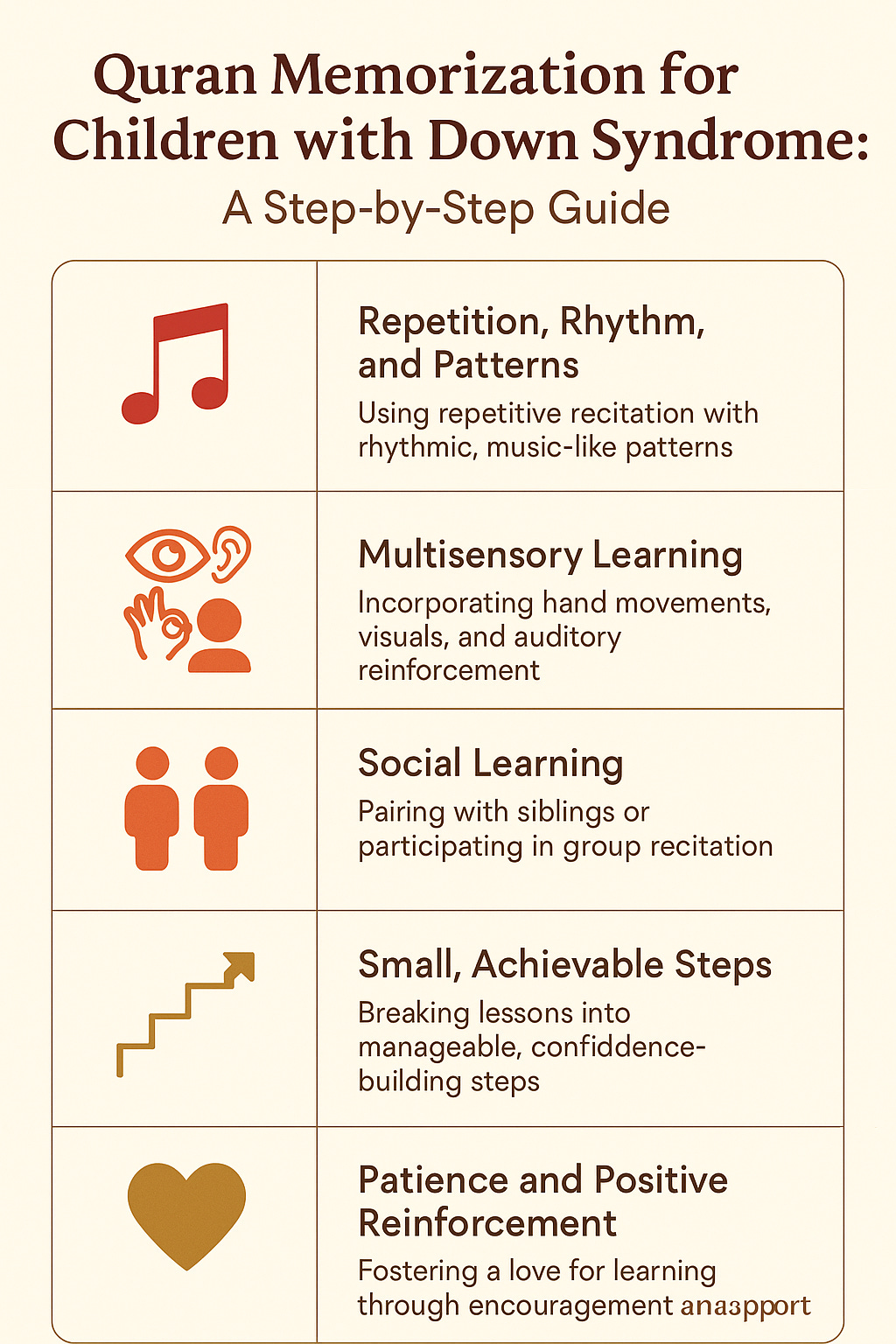
Parents and teachers may find themselves repeating instructions over and over, sometimes wondering if anything is registering. But rather than viewing repetition as a sign of failure, it should be embraced as a key to success—so long as it’s strategic. Repetition paired with variation—such as changing tone, using gestures, adding visual cues, or incorporating familiar routines—can help anchor understanding. For example, linking a verse with an image, a movement, or a consistent daily ritual transforms it from an abstract sequence of sounds into a meaningful, memorable experience. In this context, patience and creativity become the bridge between confusion and comprehension, making Quran learning feel possible, manageable, and even joyful for both the child and the adult guiding them.
Harnessing Rhythm and Melody: How Quranic Cadence Unlocks Memory
The Quran, by its very nature, is deeply rhythmic. Its verses (āyāt) are crafted with a divine cadence—melodic, phonetically intricate, and beautifully patterned. This rhythm is not only spiritually captivating; it holds neurological power. Cognitive neuroscience research shows that rhythm and melody activate several regions of the brain at once, including those responsible for memory formation, language comprehension, and emotional processing [5]. This multisensory stimulation is especially valuable for children with Down syndrome, who often find conventional auditory memory tasks challenging.
What rhythm offers is a cognitive anchor. Studies in music therapy have consistently shown that rhythmic and melodic patterns can enhance working memory, support language development, and even regulate emotional responses in children with intellectual disabilities. In an Islamic context, this has profound implications: Quranic recitation, when performed with a steady, melodic rhythm, functions similarly to therapeutic rhythm. The child is not simply hearing a verse—they are feeling its pattern, engaging emotionally with its sound, and gradually internalizing it through repetition and musical familiarity.
For a child with Down syndrome, this means a verse of the Quran is far more likely to be retained when recited melodically than when spoken plainly. The brain doesn’t just process the words—it forms a deeper neural imprint, linking meaning, memory, and emotion. Thus, rhythm is not a decorative feature of Quranic recitation—it is an essential bridge to memorization, understanding, and spiritual connection.
Practical Applications in Quran Lessons
To harness the benefits of rhythm-based memorization, parents and teachers can introduce Quranic verses using a consistent, melodic, sing-song style of recitation. This doesn’t need to be musically complex—just a gentle, repeated rhythm that the child can recognize and anticipate. Adding physical movement—such as softly clapping, swaying, tapping on a table, or even marching in place—engages the body’s motor system, which is closely linked to memory consolidation. This kind of multisensory approach stimulates the brain more broadly, reinforcing the learning through both sound and motion.
One of the most effective strategies is to use a repetitive call-and-response pattern. In this method, the adult recites a verse or phrase, and the child repeats it. Over time, this back-and-forth rhythm becomes familiar and comforting, helping the child not only memorize but enjoy the interaction. To set the child up for success, it’s best to start with short, rhythmically simple verses—many of which are found in Juz Amma, the 30th part of the Quran. These surahs are already structured in concise, patterned ways that make them ideal for early memorization.
Consistency is key. Recite the same verse during predictable daily moments—while driving to school, during a walk, before bedtime, or during morning routines. The goal is not to demand perfect recall, but to create gentle, immersive exposure. With enough repetition and rhythm woven into the child’s day, the words settle naturally into long-term memory. Even if the child cannot immediately recite the verse aloud, internal comprehension and connection are building quietly and steadily. This process respects the child’s pace, while rooting the Quran deeply in their heart and mind.
Engaging the Senses: Why Multisensory Learning Changes Everything
Children with Down syndrome thrive in learning environments that engage multiple senses simultaneously. Due to the cognitive and language processing challenges they often face, relying exclusively on auditory instruction—such as hearing a word and repeating it—is typically not enough to ensure comprehension or memorization. Instead, when learning is designed to activate more senses—visual (seeing), auditory (hearing), tactile (touching), and kinesthetic (moving)—the brain creates stronger and more numerous neural connections. This multisensory engagement not only improves understanding in the moment but also supports longer-term retention [6].
Multisensory learning works by forming multiple memory pathways for the same piece of information. For example, if a child hears a Quranic word, sees it written on a card, traces its Arabic script with their finger, and performs a simple movement or gesture associated with it, they are encoding that word into their brain through several overlapping channels. Each sensory input reinforces the others, creating a web of associations that makes recall easier and more reliable—even for children with memory challenges.
This teaching method aligns with the principles of Universal Design for Learning (UDL), an educational framework that promotes flexible teaching strategies to meet the needs of diverse learners. UDL encourages teachers and parents to offer content in multiple ways, allowing children to access and express their learning through the methods that suit them best. For children with Down syndrome, this approach isn’t just helpful—it’s essential. It validates their unique learning style and creates a path where Quran memorization becomes both achievable and enjoyable.
Real-World Application in Quran Learning
Consider a child learning the name “Ar-Rahmān”—one of the most beautiful names of Allah, encompassing the vastness of His mercy. Through a multisensory approach, this single word can be transformed from abstract text into a deeply felt experience:
Visual: Present the word “Rahmān” in large, bold Arabic script, paired with a simple, meaningful image—such as a heart—to visually convey the concept of mercy.
Auditory: Recite the word aloud using a gentle, rhythmic tone. Repeat it slowly and melodically, allowing the sound to settle into the child’s auditory memory.
Tactile: Invite the child to trace the Arabic letters using their finger in sand, clay, or on a textured tracing board. The act of physically engaging with the shape of the word deepens focus and retention.
Kinesthetic: Pair the word with a simple movement—like placing a hand over the heart—to symbolize the warmth and compassion of Allah’s mercy. This bodily motion connects the word with feeling.
In this way, “Rahmān” is not just heard—it is seen, felt, touched, and embodied.
One study involving children with intellectual disabilities found that students taught using multisensory techniques showed significantly higher levels of retention, comprehension, and emotional engagement than those taught through auditory methods alone [6]. For Quran instruction, this approach is especially powerful. It mirrors the emotional and spiritual richness of the text, transforming Quranic vocabulary and verses into lived experiences rather than rote information. For children with Down syndrome, this means their Quran learning journey becomes something they can feel, connect to, and remember—with both their hearts and their minds.
Breaking It Down: The Power of Chunking for Quran Memorization
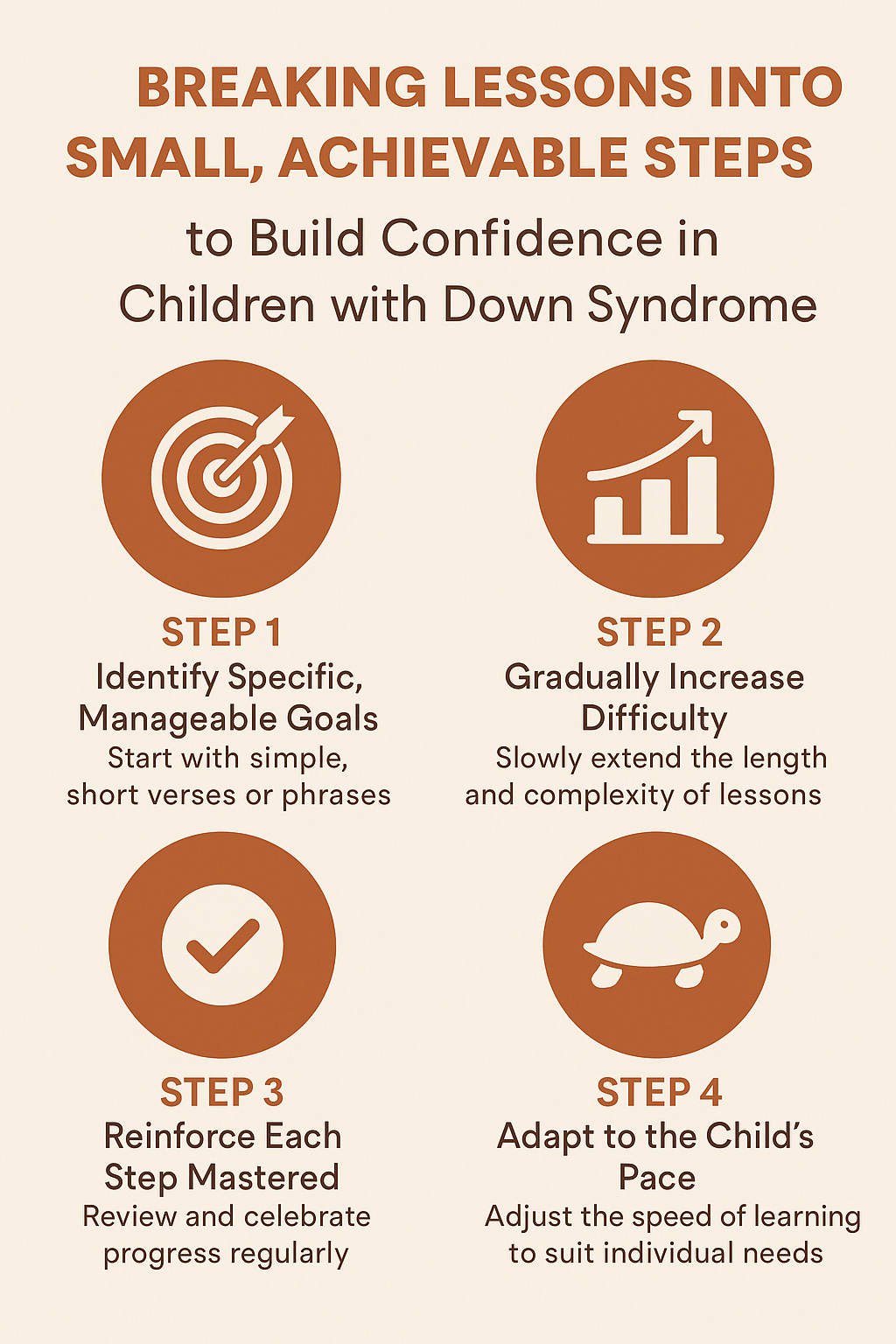
One of the most powerful and research-backed strategies for teaching children with Down syndrome is a method called chunking—breaking down information into smaller, more manageable parts. For Quran memorization, this technique is especially critical. Even a single āyah (verse) can contain unfamiliar vocabulary, layered meanings, and challenging pronunciation, which can feel overwhelming if presented all at once. By dividing a verse into small, digestible segments—sometimes even just one or two words at a time—we help the child focus, process, and internalize each piece with greater clarity and confidence.
This method is particularly effective because many children with Down syndrome have reduced working memory capacity. In simple terms, their brains can hold and manipulate only a small amount of information at any given time. Trying to memorize a full sentence may exceed this limit, leading to confusion or discouragement. But when we offer just a tiny piece—“Ar-Rahmān,” for instance—and repeat it slowly with visual and emotional reinforcement, the child is far more likely to succeed. And with success comes motivation.
Chunking transforms memorization into a series of small victories. Each successfully remembered segment becomes a building block. Over time, these blocks are gently assembled—like puzzle pieces—into full verses and, eventually, entire surahs. This approach not only builds memory, but also cultivates patience, confidence, and a sense of accomplishment. For the child, learning the Quran no longer feels like climbing a mountain—it becomes a journey of meaningful steps, each one achievable and rewarding.
Step-by-Step Implementation
Imagine a child beginning to learn Surah Al-Fātiḥah. Instead of jumping straight into the full verse—“Alhamdu lillaahi Rabbil ‘aalameen”—we start with just the first word: “Alhamdu.” The child hears it recited slowly, rhythmically. They repeat it aloud, trace it with their finger on a textured card or in sand, and perhaps even see it illustrated alongside a simple image, like a smile or a gift, symbolizing gratitude. Once the child becomes confident and familiar with “Alhamdu”, we introduce the next piece: “lillaahi.” That word is practiced in the same multisensory way—spoken, traced, heard, seen. Only when both segments are comfortably retained do we join them together: “Alhamdu lillaahi.”
This is the essence of chunking—not rushing toward completion, but honoring the pace of meaningful mastery. And crucially, repetition must be purposeful, not mechanical. Children with Down syndrome respond best when repetition is infused with variety and emotional depth. Each chunk should be explored using rhythm, visual cues, hand gestures, or simple storytelling. For example, when teaching “Ar-Raḥmān”, a teacher might pair it with a picture of the sun radiating warmth, reinforcing the idea of divine mercy in a way the child can both see and feel.
This layered, sensory-rich method builds more than just memory. It builds confidence. As the child successfully memorizes one chunk after another, they begin to internalize a powerful belief: “I can do this.” They stop seeing the Quran as something distant or difficult and start recognizing it as something they are capable of learning, connecting with, and loving. This emotional bond—formed through small wins and patient repetition—is what transforms Quran memorization from a struggle into a source of joy and spiritual growth.
Learning with Love: The Role of Social Bonds and Siblings in Quran Learning
Children with Down syndrome are often naturally social and emotionally attuned. They flourish in environments where connection, empathy, and inclusion are woven into the learning experience. Emotional safety isn’t a luxury—it’s a foundational need. These children tend to thrive when they feel seen, supported, and loved, and they are often exceptionally responsive to human interaction, whether through facial expressions, tone of voice, or shared routines.
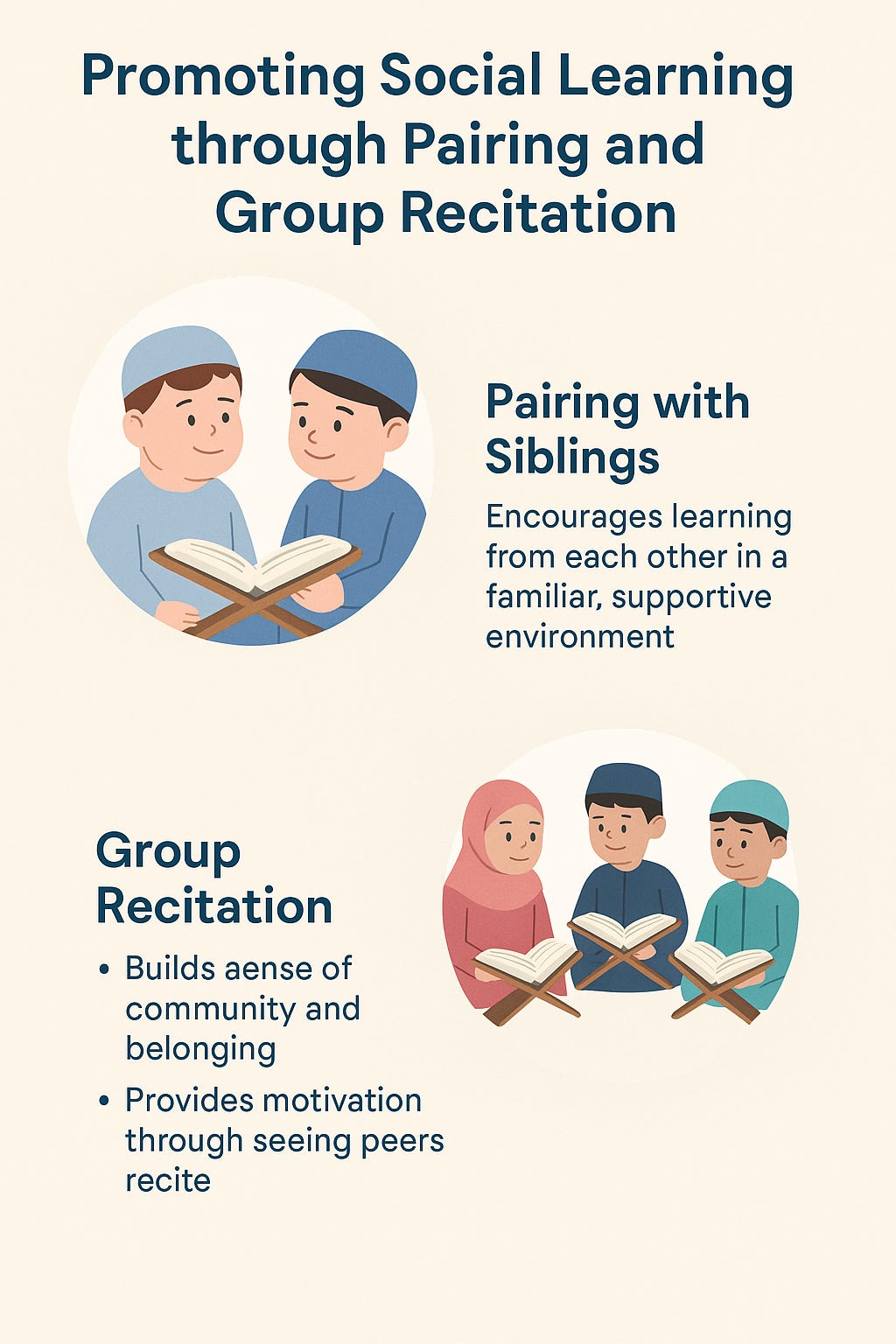
This social orientation makes family dynamics—and especially the presence of siblings—an incredibly powerful asset in Quran education. While many children with Down syndrome face challenges with verbal communication and shorter attention spans, they tend to respond strongly to visual cues and the behavior of peers around them [10]. According to Ishak et al. (2022), peer modeling—the process by which children learn through observing others—is particularly effective for learners with cognitive and language delays. When a child watches a sibling or friend reciting verses with joy or excitement, the brain's natural mirror neuron system is activated, encouraging imitation not through pressure, but through inspiration.
In practice, this means siblings can play an invaluable role—not just as helpers, but as models. A younger or older sibling sitting nearby and practicing Quran with genuine enthusiasm can gently invite the child with Down syndrome into participation. Even if the child does not immediately recite along, they are observing, processing, and gradually building the confidence to try. For children with speech or auditory processing difficulties, this form of modeling—where visual and emotional cues are clear—provides a low-stress, high-engagement entry point into Quranic learning. The experience becomes shared, relational, and deeply motivating, reinforcing that learning the Quran is not a solitary struggle, but a family journey rooted in love and belonging.
Why Peer Learning Works
Research shows that children with intellectual disabilities often learn more effectively through peer interaction than through traditional, adult-led instruction [7]. This is especially true when the learning is embedded in a natural, emotionally supportive environment—something peers and siblings intuitively offer. In the context of Quran education, this might look like an older sibling proudly displaying a colorful memorization chart on the wall, a cousin joyfully clapping after a shared recitation, or a younger sibling playfully helping to correct a mispronounced word. These are not just moments of academic progress; they are moments of belonging, joy, and identity-building.
For children with Down syndrome—many of whom also experience hearing impairments or have limited expressive vocabulary [10]—these peer interactions are invaluable. When verbal communication becomes a barrier, peer modeling offers an alternative path into learning. Watching a sibling mouth the words of a verse, joining in during a shared recitation circle, or mimicking gestures associated with a word activates the child’s strengths: visual processing, emotional resonance, and a natural desire to connect.
These social learning moments create non-verbal bridges into spiritual engagement. The child may not be able to pronounce the entire verse yet—but they can feel what it means to be part of a learning moment, to be included, to be celebrated. Over time, these interactions don’t just support Quran memorization; they lay the foundation for a loving relationship with the Quran, built on connection, inclusion, and shared faith. In this way, siblings and peers become not just helpers, but spiritual companions on the journey.
Strategies for Home and Classroom
Quran Buddy Time: One of the most effective ways to build engagement is through pairing. Match the child with a peer or sibling for short, consistent Quran sessions—just 5 to 10 minutes daily. They can take turns reciting simple verses, helping each other trace Arabic letters with their fingers, or singing a verse together in a melodic tone. The goal is not perfection, but participation and connection.
Group Recitation Circles: In classrooms or masjid environments, create small, supportive Quran groups where rhythmic recitation is combined with visual aids and movement-based cues. Children can sway gently as they recite, tap out syllables with their hands, or respond to simple gestures that convey the meaning of the verse. These shared routines create a safe, joyful space where learning feels communal and energizing.
Sibling Mentors: Instead of assigning older siblings the role of “corrector,” guide them to become mentors—models of joyful learning. Encourage them to praise effort, use playful tones, and share their own memorization challenges. Children with Down syndrome respond better to positive reinforcement and imitation than criticism. When a sibling recites with excitement, celebrates small wins, or lovingly encourages a retry, they become part of the child’s spiritual growth.
As Ishak et al. emphasize, children with Down syndrome learn best in emotionally safe, visually enriched environments where they feel connected and capable [10]. Involving siblings, cousins, and close friends transforms Quran memorization from an isolated task into a relational act of worship. The Quran becomes a shared experience—recited, celebrated, and loved together.
Motivation That Builds: The Psychology of Encouragement and Reward in Faith-Based Learning
Motivation is the invisible force that powers every meaningful learning journey. For children with Down syndrome—who may face repeated hurdles in communication, focus, or memory—motivation must be built with intention. It cannot rely on external pressure or unrealistic expectations. Instead, it must grow from a foundation of patience, consistent affirmation, and unconditional love.
These children often encounter daily struggles that can wear down their confidence. That’s why the Quran classroom—whether at home or in a masjid—must be a sanctuary. A space where even the smallest effort is seen, celebrated, and valued. Smiling praise, high-fives, sticker charts, verbal du’as (“May Allah bless your beautiful effort!”), or simply offering a moment of shared joy when a verse is remembered—all of these affirm that the child’s work matters.
Motivation rooted in faith also strengthens spiritual identity. When a child is told, “Allah loves when you try,” or “You’re walking the path of the ahlul-Qur’an,” it links effort to meaning. It tells the child: Your place in this ummah is honored. Over time, this deep, loving reinforcement builds not just memorization—but a lifelong love for the Quran and for the act of learning itself.
The Science Behind Positive Reinforcement
In developmental psychology, positive reinforcement is a well-established technique that involves immediately recognizing and rewarding a desired behavior to increase the chances of it happening again. For children with developmental disabilities, this strategy is not only effective—it’s essential. Numerous studies have confirmed that when a child receives a positive response—such as verbal praise, a sticker, a warm hug, or even a smile—the brain releases dopamine, a neurotransmitter that strengthens the neural pathways linked to that behavior [8]. In essence, the brain learns: this action felt good—I want to do it again.
In the context of Quran learning, positive reinforcement becomes a spiritual and psychological tool. It teaches the child not only what to do, but how it feels to succeed. And success doesn’t have to be big or dramatic. Did the child sit for two minutes and quietly listen to the Quran being recited? Praise that. Did they whisper “Bismillah” before beginning? Celebrate that. Did they try—even if the words came out jumbled? That effort is worthy of recognition.
The key is immediacy and sincerity. Children with Down syndrome respond best when feedback is given in the moment, in a tone filled with warmth and pride. Over time, these consistent, joyful reinforcements associate Quran sessions with safety, love, and accomplishment—not pressure or performance. And when that emotional environment is established, learning flows more freely. Quran time becomes something the child looks forward to—because it feels like being seen, valued, and spiritually connected.
Islamic Spirit of Reward
Beyond the insights of behavioral psychology, Islam offers a profound and compassionate spiritual framework for motivation—one that speaks directly to the hearts of children and nurtures their connection to Allah. While dopamine reinforces effort on a neurological level, iman (faith) reinforces it on a soul-deep level. Children should be gently reminded that Allah is Al-Shakoor—the One who rewards even the smallest effort, seen or unseen. As the Prophet ﷺ beautifully said: “Do not consider any good deed insignificant, even meeting your brother with a cheerful face” (Muslim).
This divine encouragement can be seamlessly integrated into Quran lessons to uplift, inspire, and motivate. Some simple yet powerful ways include:
Spiritual Praise: Say to the child, “Every letter you read earns you a reward from Allah. Even if it’s hard, He sees how much you're trying.” This reframes effort as spiritually valuable, not just educationally necessary.
Du’a Jars: Create a “du’a jar” filled with short, beautiful supplications. After completing a task—reciting a verse, sitting attentively, or repeating a word—the child can choose one to read aloud. This makes each milestone feel like a moment of divine connection.
Imagery of Angels and Light: Use storytelling to describe how, with every word of the Quran, angels are writing their name in books of light, or how their voice echoes in the heavens. These visual, faith-filled narratives appeal to a child’s imagination and heart.
When Islamic motivation is paired with emotional safety and developmental support, Quran memorization becomes more than just an academic exercise. It becomes a spiritually charged experience that roots a child’s identity not just in ability, but in belovedness before Allah. They are no longer just learners—they are worshippers, seen and celebrated by their Creator.Tools and Techniques
Visual Charts: Use sticker or star charts with clear, achievable goals.
Token Boards: Offer small rewards (e.g., a favorite story, extra play time) after a set number of successful recitations.
Praise-Rich Language: Replace “That’s wrong” with “That was a great try—let’s try again together.”
When encouragement is rooted in both neuroscience and spiritual empathy, it builds not only memory but also identity. The child begins to see themselves as a Quran learner, a doer of good, and a recipient of divine love.
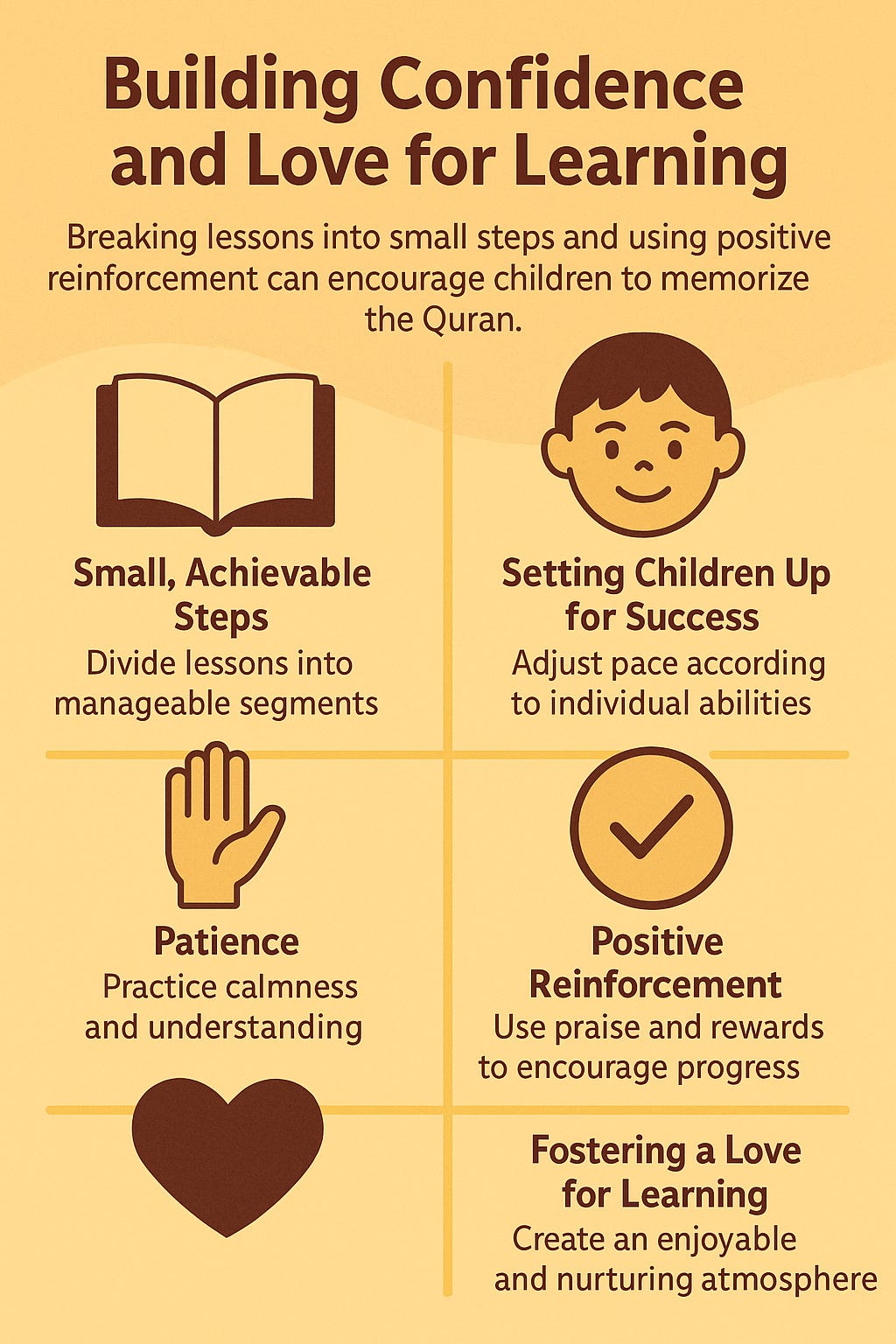
Supportive Tools and Resources: Building the Ideal Learning Environment
Having the right environment and tools is just as crucial as using the right instructional methods. Children with Down syndrome are sensitive to both their physical and emotional surroundings. A structured, visually rich, and emotionally safe Quran learning space significantly increases engagement and reduces anxiety. According to Ishak et al. (2022), one of the major challenges these children face is poor communication skills—both expressive and receptive—which means they rely heavily on external cues and structure to understand expectations and stay on task [10].
Designing the Environment
The physical space should be consistent, calm, and free from distractions. Use soft lighting, cushioned seating, and a visual schedule board to indicate when Quran time starts and ends. Predictability helps children with Down syndrome feel secure and focused. As highlighted in the HRMARS study, a conducive environment plays a significant role in reducing disruptive behavior and increasing sustained attention [10].
Create a dedicated “Quran corner” at home or in the classroom filled with visual aids such as Arabic alphabet charts, laminated flashcards, and sticker-based reward charts. The familiarity of a designated space signals to the child that this is a special, structured time for learning.
Minimize auditory clutter by using noise-canceling headphones or soft Quran recitations in the background. A visual timer (such as a sand clock or color-coded countdown) can also help children anticipate transitions and reduce anxiety.
Digital and Physical Learning Tools
Tarteel AI: Voice-recognition app that gives instant feedback on recitation.
Noorani Qaida Apps with Visual Cues: Useful for introducing letter recognition and pronunciation with slow pacing.
Quran Explorer Kids Edition: Interactive features such as color-coded tajweed and repeat-playback make it easier to grasp complex sounds.
For hands-on tools:
Laminated Flashcards with images to reinforce vocabulary and context.
Arabic Tracing Books to build letter recognition and fine motor skills.
Progress Trackers and Token Boards to visually represent goals and achievements.
Supporting the Parents
Parents also need structured support to navigate this journey with hope and direction. Build a small binder or digital folder with:
Weekly lesson outlines tailored to their child’s pace
Printable du’a collections related to Quran memorization
Encouraging blog posts or testimonials from other parents of children with Down syndrome
The HRMARS study emphasizes that parental involvement is key to consistent Quran education, but parents often need emotional and instructional support to stay encouraged [10].
Supportive tools aren’t about expensive devices—they’re about creating a responsive, accessible, and spiritually uplifting environment. The more we design with the child’s unique abilities in mind, the more likely they are to feel confident, respected, and eager to learn.A Final Word of Hope: You Are Planting a Seed for Eternity.
Some Final Words
If you are reading this as a parent, a teacher, or a caregiver—you are not just teaching Quran. You are building a legacy. Each small step you take, each time you patiently repeat a verse, each sticker you place on a progress chart, and each smile you offer when your child says "Alhamdulillah"—it matters deeply.
Quran memorization for children with Down syndrome isn’t about perfect tajweed or memorizing long Surahs. It’s about building a relationship with the words of Allah. It’s about giving your child a sense of spiritual belonging—a sense that this Book is for them, too. They are not excluded. They are not behind. They are walking their own pace on the path to Jannah.
There may be days of frustration, and there will be weeks where progress feels slow or nonexistent. But remember, in the eyes of Allah, intention and effort are everything. The Prophet ﷺ reminded us: “Verily, Allah does not look at your appearance or wealth, but rather He looks at your hearts and deeds” (Muslim).
Children with Down syndrome possess hearts of immense sincerity and love. When they recite Quran, even with stumbling words or imperfect pronunciation, they are expressing something pure and deeply spiritual. In those moments, you are witnessing the soul connect with its Creator.
So plant the seeds. Water them with du’a, patience, and joy. One day, perhaps not in this dunya, but in the akhirah, you will see the garden that grew from your effort.
May Allah bless every child who holds the Quran in their heart, and every parent and teacher who made it possible. Ameen.
References
National Down Syndrome Society. (2023). What is Down Syndrome? https://www.ndss.org/
Chapman, R. S. (2006). Language learning in Down syndrome: The speech and language profile. Down Syndrome Research and Practice.
Laws, G., & Bishop, D. (2004). Verbal deficits in Down syndrome and Williams syndrome. Journal of Child Psychology and Psychiatry.
Jarrold, C., & Baddeley, A. D. (2001). Short-term memory in Down syndrome. Down Syndrome Research and Practice.
Thaut, M. H., & McIntosh, G. C. (2014). Neurologic Music Therapy: Rhythm as a therapeutic tool. Frontiers in Psychology.
Moyer, M. (2016). Multisensory Instruction for Children with Learning Disabilities. Edutopia. https://www.edutopia.org/article/multisensory-learning/
Guralnick, M. J. (2010). Early intervention approaches to enhance the peer-related social competence of young children with developmental delays: A historical perspective. Infants & Young Children.
Koegel, L. K., & Koegel, R. L. (2006). Positive Behavioral Support: Strategies for teaching children with developmental disabilities. Paul H. Brookes Publishing.
Muslim, Sahih. Book 45, Hadith 6988. The Book of Birr (Piety and Good Manners).
Ishak, H., Farqan, E., & Ismail, A. (2022). Issues and Challenges of Teaching The Quran to Children with Down Syndrome. International Journal of Academic Research in Business and Social Sciences, 12(5), 157–171. https://hrmars.com/papers_submitted/13126/issues-and-challenges-of-teaching-the-quran-to-children-with-down-syndrome.pdf