

Assalamu Alaikum,
By the time Thanksgiving break begins, your child might already know whose cousins are flying in, who’s helping make the pie, and who’s spending the day at Grandma’s house.
Everyone at school seems to have a plan.
Then your child comes home and asks:
“Mama, what are WE doing?”
Maybe you’ve heard a similar question at work all week.
“What are your Thanksgiving plans?”
Your child has been hearing it at school, too.
And when every answer seems to include family gatherings, special food, or exciting activities, it’s understandable that they’d want something to talk about as well.
But here’s something worth remembering:
Your child may not be asking to celebrate Thanksgiving. They may simply be asking for something to look forward to.
First, find out what they’re really asking for
Every Muslim family approaches Thanksgiving differently.
Some enjoy the opportunity to gather with family and friends. Others don’t observe the occasion but appreciate having time together during the school break.
Whatever your family’s approach, start by asking your child one simple question:
“When your friends talk about their plans, what part sounds fun to you?”
Their answer might surprise you.
Maybe they want to see their cousins.
Maybe they want to bake something with you.
Maybe they want to invite a friend over.
Or perhaps what they really want is an afternoon with you, without work calls, school runs, or someone reminding them to finish their homework.
Sometimes, the thing a child is looking forward to isn’t a particular holiday.
It’s time together.
And once you understand what matters to them, you can make a plan that works for your family.
Give them something they can help create
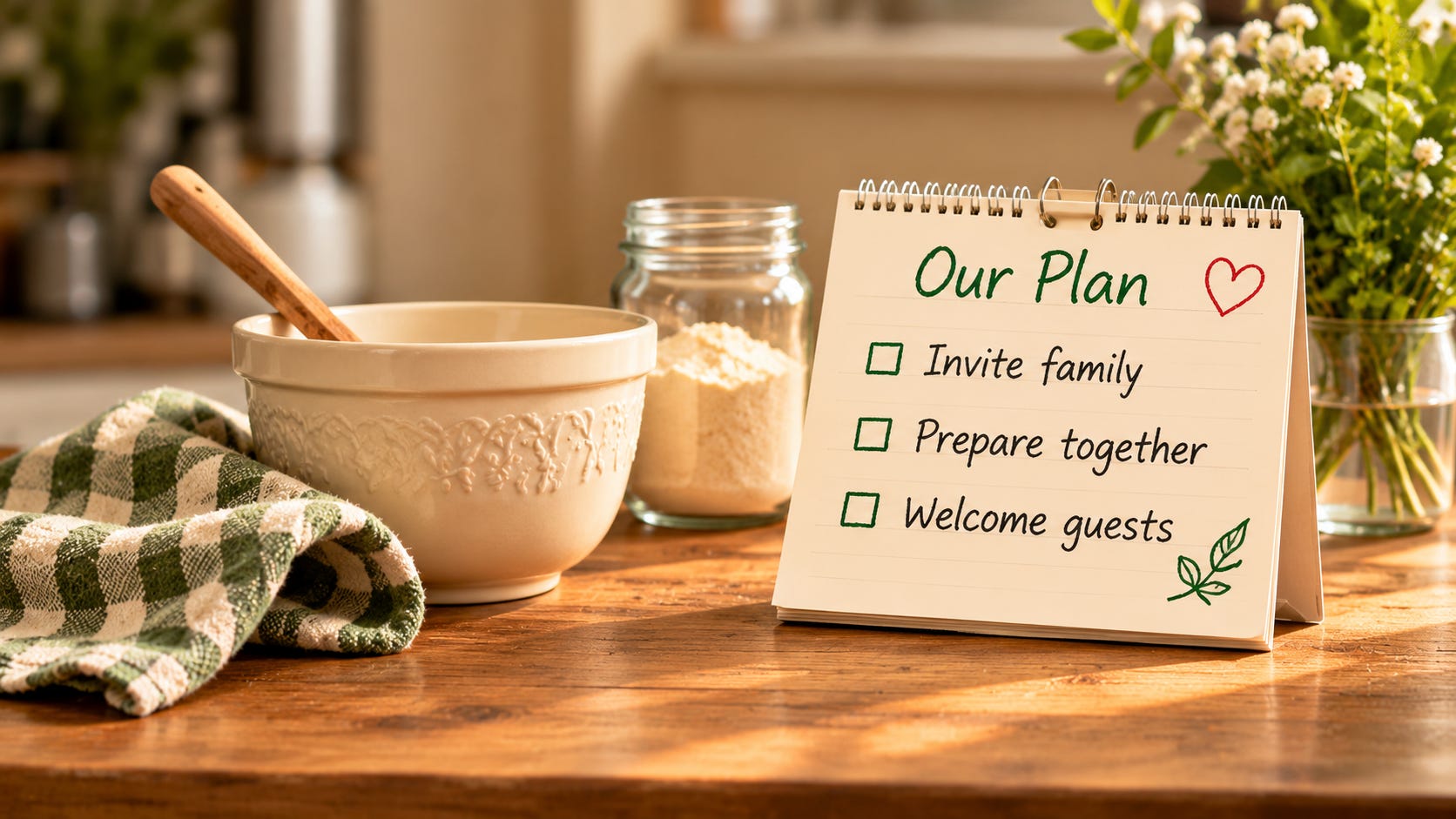
You don’t need an elaborate celebration, expensive activities, or a perfectly decorated home.
Start with something small.
You might say:
“I’m free Saturday afternoon. Who would you love to invite over?”
Let your child help decide.
If they choose their cousins, let them send a voice message inviting them.
If they want to invite a neighbor, ask what they’d like to prepare together.
If they choose a family evening at home, let them pick a game or help prepare their favorite meal.
Then give them a meaningful part in the plan.
They could welcome guests with Assalamu Alaikum, help set the table, pour drinks, or serve something they’ve helped make.
These little responsibilities help children feel that they’re contributing, not simply watching adults arrange everything.
And the plan doesn’t need to be expensive.
Soup and bread count.
So do homemade brownies, a board game, and an hour spent laughing together.
If nobody can visit, perhaps your child could help prepare something small for a relative or neighbor.
The goal isn’t to recreate someone else’s celebration. It’s to give your child a meaningful experience of their own.
Let them experience gratitude, not just hear about it
We often remind children to be grateful.
“Say Alhamdulillah.”
“Be thankful for what you have.”
“Remember your blessings.”
These are meaningful reminders.
But children can also learn gratitude through experiences they help create.
Imagine your child has invited their cousins for a simple afternoon together.
They helped prepare the snacks.
They greeted everyone at the door.
They spent time laughing and playing.
Later, as everyone leaves, you say:
“Alhamdulillah, we got to spend time together today. I’m so glad you thought of inviting them.”
Now your child connects gratitude with something they’ve experienced.
They’ve seen how welcoming someone can make that person happy.
They’ve learned that hospitality doesn’t require anything extravagant.
And they’ve experienced the joy of sharing what they have.
These are beautiful Islamic values that can be practiced throughout the year.
Give them a story of their own
Think about what happens when your child returns to school.
Their friends begin talking about the break.
Someone visited grandparents.
Someone made a special meal.
Someone spent the weekend with cousins.
And when it’s your child’s turn, they have something to share, too.
“My cousins came over. I invited them!”
Or perhaps:
“We made dinner together and played games all evening.”
It may sound like a small thing.
But for a child who was worried about having nothing to say, it can mean a lot.
They don’t have to feel that their family must do everything their friends do to have meaningful experiences.
And they don’t have to hide the differences that make their family unique.
They can enjoy their own traditions, friendships, and family moments.
A little thought for parents
As Muslim parents raising children in the West, we sometimes focus so much on explaining what our families do differently that we forget to ask what our children are actually feeling.
Sometimes, they need an explanation.
Sometimes, they need reassurance.
And sometimes, they just need us to ask:
“What would make this break special for you?”
Their answer doesn’t have to become an elaborate plan.
It can become a simple afternoon together.
An invitation to someone they love.
A small act of kindness.
Or a memory they’ll be excited to share.
Because helping children feel included isn’t always about joining what everyone else is doing.
Sometimes, it’s about giving them a meaningful place in something your own family creates together.
💚 One Question to Ask Your Child Today
“Who would you love to spend time with over the break?”
Listen to their answer.
Then make one small plan together.
It doesn’t have to be perfect.
It just has to be something you can both look forward to.
With care,
The AlQuranClasses Team
Have your children ever asked what your family is doing during Thanksgiving break? We’d love to hear how you approached the conversation.
If this article reminded you of another Muslim parent, share it with them. Sometimes, one simple idea is all a family needs.