

How does a child’s brain internalize the Quran—a sacred text imbued with divine rhythm, moral weight, and linguistic beauty?
This article explores the intersection of Quranic education and cognitive neuroscience. As awareness grows around learning differences, attention spans, and memory science, we are now better equipped than ever to reimagine how we teach the Quran.
By blending classical Islamic pedagogy with insights from neuroscience and educational psychology, we uncover how children store, retrieve, and form lasting bonds with what they memorize.
From working memory limitations to emotional encoding, from multisensory strategies to neurodiversity accommodation, this article offers a new lens through which Muslim parents and educators can support children in becoming true carriers of the Quran: heart, mind, and soul.
He Knows It Today, But Forgets It Tomorrow—Why?
Fatima sat across the table from her 8-year-old son, her heart sinking with every pause he took. His fingers fidgeted with the corner of his notebook, and his eyes—once bright with confidence—now drifted toward the window as he stumbled again on the second ayah of Surah Al-Baqarah. It was the fourth time this week. But he knew it yesterday, she reminded herself, frustration bubbling up as she later told his teacher, “He had it perfectly just last night. I don’t understand what’s happening.”
This quiet scene—a mother and child, the Quran between them—might seem ordinary. But it carries a weight that countless Muslim parents feel around the world. They sit in homes filled with sincerity and du’as, guiding their children through memorization with love, only to find the verses slipping away as quickly as they came. The disappointment isn’t just in the forgetting—it’s in the confusion. The child tried. The parent tried. So why isn't it working?
The struggle, more often than not, isn’t rooted in laziness or lack of effort. It’s rooted in something far more subtle—our methods. The question we don’t often ask is: How does a child’s brain actually learn and retain something as rich, layered, and rhythmic as the Quran?
And what if we took a step back—just for a moment—to imagine what it would look like if our teaching methods weren’t based solely on repetition or pressure, but were informed by both Islamic tradition and the latest research in cognitive science?
What if memorizing the Quran could become not just a spiritual act—but also a process that honors how a child’s brain truly learns?

Section 1: Understanding Working Memory—the Brain’s Short-Term Holding Pen
Working memory is like the brain’s temporary workspace—a mental notepad where information is briefly held and actively processed before it’s either stored for later or forgotten. It’s where we juggle numbers while doing mental math, or where a child briefly holds the next word of an ayah before reciting it aloud. But this workspace is surprisingly limited.
According to Cowan (2001), the average child can hold only 3 to 5 chunks of information in working memory at one time. These “chunks” might be as small as individual words or sounds, depending on the child's familiarity with the material. When that limit is exceeded, the brain becomes overloaded, and the new information simply slips away [2].
This limitation becomes particularly significant when applied to Quranic memorization. Many Quranic ayahs—especially in surahs like Al-Baqarah or Al-Imran—are packed with profound meaning, rich linguistic structure, and rhythmic patterns. Attempting to memorize an entire ayah in one sitting, especially without prior familiarity, can easily flood a child’s working memory. The result? Frustration, errors, and frequent forgetfulness—not because the child isn’t trying, but because the brain is operating beyond its design.
Interestingly, the Quran itself seems to acknowledge these cognitive boundaries. Allah says:
“And We have sent down the Quran in stages so that you may recite it to people at intervals...”
(Surah Al-Isra, 17:106)
This divine pacing wasn’t arbitrary. It reflects a deep wisdom that mirrors what modern cognitive research tells us: that learning is more effective when it is spaced out, broken into segments, and paced appropriately—a strategy known in neuroscience as “distributed practice” or the spacing effect [9]. This method gives the brain time to process, rehearse, and consolidate information into long-term memory.
In other words, both revelation and research agree on a vital point: learning—especially something as sacred and dense as the Quran—is not a race. It is a process that honors the natural rhythms of the human mind.
What Helps:
1. Chunking long ayahs into smaller 3–4 word phrases
When an ayah is broken down into smaller, manageable chunks—such as 3 to 4 words at a time—it becomes far easier for a child to process and retain the content. This technique aligns directly with the limits of working memory, which can only handle a few pieces of information at once before becoming overwhelmed [9]. For example, instead of asking a child to memorize the full ayah:
"Allahu la ilaha illa Huwa Al-Hayyul-Qayyum..." (2:255)
you might break it into:
Allahu la ilaha illa Huwa
Al-Hayyul-Qayyum
Each segment is small enough to be held in working memory, repeated, and internalized before moving on to the next—preventing the mental fatigue that often comes with tackling longer ayahs all at once.
2. Echo technique
The echo technique involves the teacher or parent reciting a short phrase and the child immediately repeating it back. This simple, call-and-response style not only keeps the child actively engaged, but also enhances encoding into short-term memory. Hearing and then immediately vocalizing the words helps strengthen the auditory loop of working memory, which is especially important for children who are auditory learners. Repeated echoes help stabilize the content before it fades away, making it easier to eventually store in long-term memory.
3. Finger-tracing engages the motor system
Finger-tracing the words of the Quran—either on the mushaf or on a tablet—activates the motor cortex in the brain, which can significantly enhance learning [1]. When movement is combined with visual and auditory input, multiple neural pathways are engaged. This multisensory learning experience leads to deeper encoding and better recall. Finger-tracing also fosters attention and focus, particularly in younger children who benefit from tactile involvement. It transforms memorization from a passive activity into an embodied, interactive process.
4. Pausing between repetitions
Pausing is more than just a break—it’s a neurological strategy. When children are given time to pause after repeating a chunk, their brains are given a brief but critical window to process what they’ve just heard and rehearsed. These micro-pauses allow the brain to begin shifting information from short-term to long-term memory [1]. Without pauses, repetition can become rote and ineffective. With strategic pausing, learning becomes more reflective and long-lasting.

Section 2: From Short-Term to Forever—How Encoding Locks In the Quran
Long-term memory formation isn’t automatic. Simply hearing something—no matter how many times—isn’t enough for the brain to commit it to lasting memory. To truly encode information for long-term use, the brain must actively process it. This involves engaging with the content on multiple levels, rather than passively absorbing it.
In a foundational study, Craik and Tulving (1975) identified three key forms of encoding: semantic (meaning-based), acoustic (sound-based), and visual (image-based) [3]. Each of these engages a different part of the brain. When only one mode is used—such as merely listening—the learning tends to remain shallow and short-lived. But when all three are activated together, the brain creates a richer and more interconnected memory trace.
For example, when a child memorizes an ayah by:
Hearing the recitation (acoustic),
Seeing the words on the page or tracing them (visual),
And understanding or discussing the meaning (semantic),
the information becomes more deeply rooted in the neural network. These multiple pathways make it easier for the child to recall the ayah later, even under pressure or after some time has passed.
This multi-layered encoding process is what transforms short-term repetition into lasting knowledge. It’s also why Quranic memorization should be more than just repetition—it should be a sensory and meaningful experience that engages the whole mind.
What Helps:
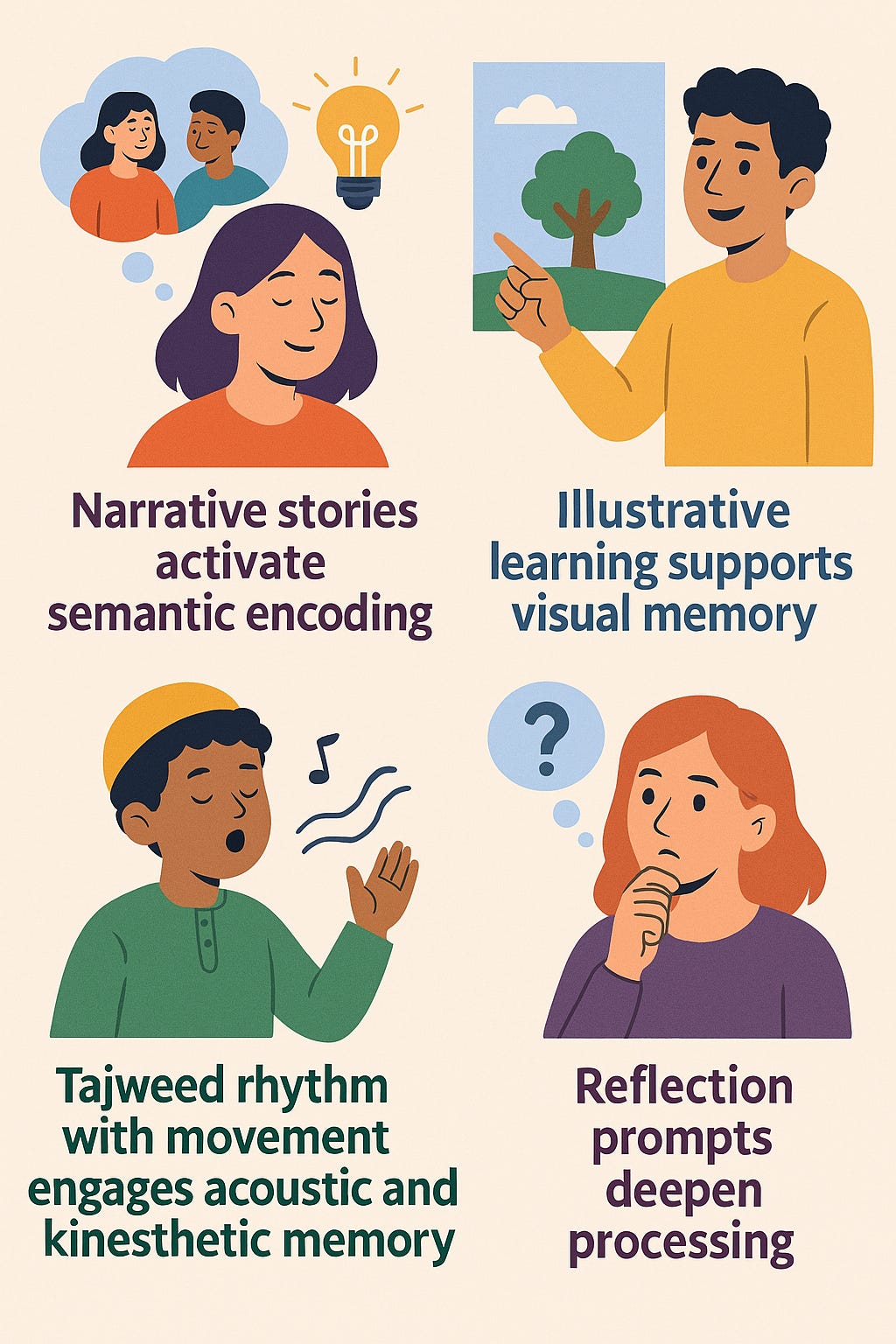
1. Narrative stories activate semantic encoding
When a child hears a story—especially one with characters, emotions, and meaning—their brain does something extraordinary: it begins to make connections. This is known as semantic encoding, where the mind stores information based on meaning and context [3]. For example, when teaching an ayah about gratitude or patience, framing it within a real-life scenario or a Prophetic story gives the child an emotional and conceptual anchor. The ayah stops being just words to memorize and becomes a truth they can relate to. This depth of meaning significantly boosts long-term retention because the brain prioritizes storing information that feels important or emotionally relevant.
2. Illustrative learning supports visual memory
Children are naturally visual learners. Incorporating illustrations, diagrams, or mental imagery into Quran lessons taps directly into visual encoding [3]. Whether it's a drawing of the Kaaba while learning Surah Al-Fil or a colorful mind map to represent the themes of Surah Al-Asr, visual cues help the brain create lasting mental pictures. These images often become memory hooks that children subconsciously return to when recalling an ayah. Even simple practices—like using highlighters to mark similar sounds or writing out verses with different colors—help strengthen visual memory.
3. Tajweed rhythm with movement engages acoustic and kinesthetic memory
Tajweed rules don’t just beautify the Quran—they also enhance acoustic encoding, which is how the brain stores information based on sound [3]. The rhythmic recitation, paired with consistent auditory patterns, acts like a melody that’s easier for the brain to hold onto. When this rhythm is paired with kinesthetic activity, such as gently swaying, tapping a finger, or using hand motions to emphasize stopping points, the brain forms even stronger associations. Movement activates the motor cortex, which creates another pathway for the information to be stored—especially helpful for kinesthetic learners who learn best when their bodies are involved.
4. Reflection prompts deepen processing
After memorizing or reciting an ayah, asking a child questions like “What do you think this means?”, “Can you think of a time this might apply to your life?”, or “Why do you think Allah used this word?” encourages deeper semantic processing [3]. When a child reflects, they aren’t just repeating—they’re interpreting, personalizing, and emotionally connecting with the words of Allah. This not only deepens their understanding but helps move the ayah from surface-level memory into more stable, long-term storage. Reflection slows the learning process in a meaningful way—helping the Quran settle not just in the mind, but also in the heart.
Section 3: Spaced Repetition—The Sunnah of Science
German psychologist Hermann Ebbinghaus was among the first to scientifically study memory and forgetting. His famous concept—the “Forgetting Curve” (1885)—visually demonstrated how quickly newly learned information begins to fade from memory if it’s not reviewed [4]. According to his findings, we can forget up to 50% of what we learn within an hour, and almost 80% within a few days, unless that information is reinforced. This curve isn’t just theoretical; it plays out in every classroom, Quran lesson, and revision session.
But there’s good news. Ebbinghaus also discovered that this forgetting isn’t inevitable. Spaced repetition—the practice of reviewing material at strategic, increasing intervals—can dramatically slow the forgetting curve and lead to stronger, longer-lasting memory. Instead of cramming everything into one session, spaced repetition allows the brain to revisit and re-encode the information just as it's about to be forgotten. Modern studies continue to confirm this: reviewing material at timed intervals significantly enhances recall and strengthens long-term memory consolidation [7].
Interestingly, this methodical, rhythmic approach to learning mirrors a timeless prophetic principle. The Prophet Muhammad ﷺ said:
“The most beloved deeds to Allah are those done consistently, even if they are small.”
(Sahih al-Bukhari)
This hadith not only emphasizes the spiritual merit of regular practice but also subtly points to a powerful psychological truth: consistency—not intensity—is the key to meaningful, lasting growth. Whether it’s memorizing Quran, revising past surahs, or practicing tajweed, it is the small, steady efforts—repeated over time—that create lasting impact in both the heart and the mind.
So, while Ebbinghaus charted the science of forgetting, the Sunnah gave us a divine rhythm for remembering—anchored in wisdom, mercy, and sustainability.
What Helps:
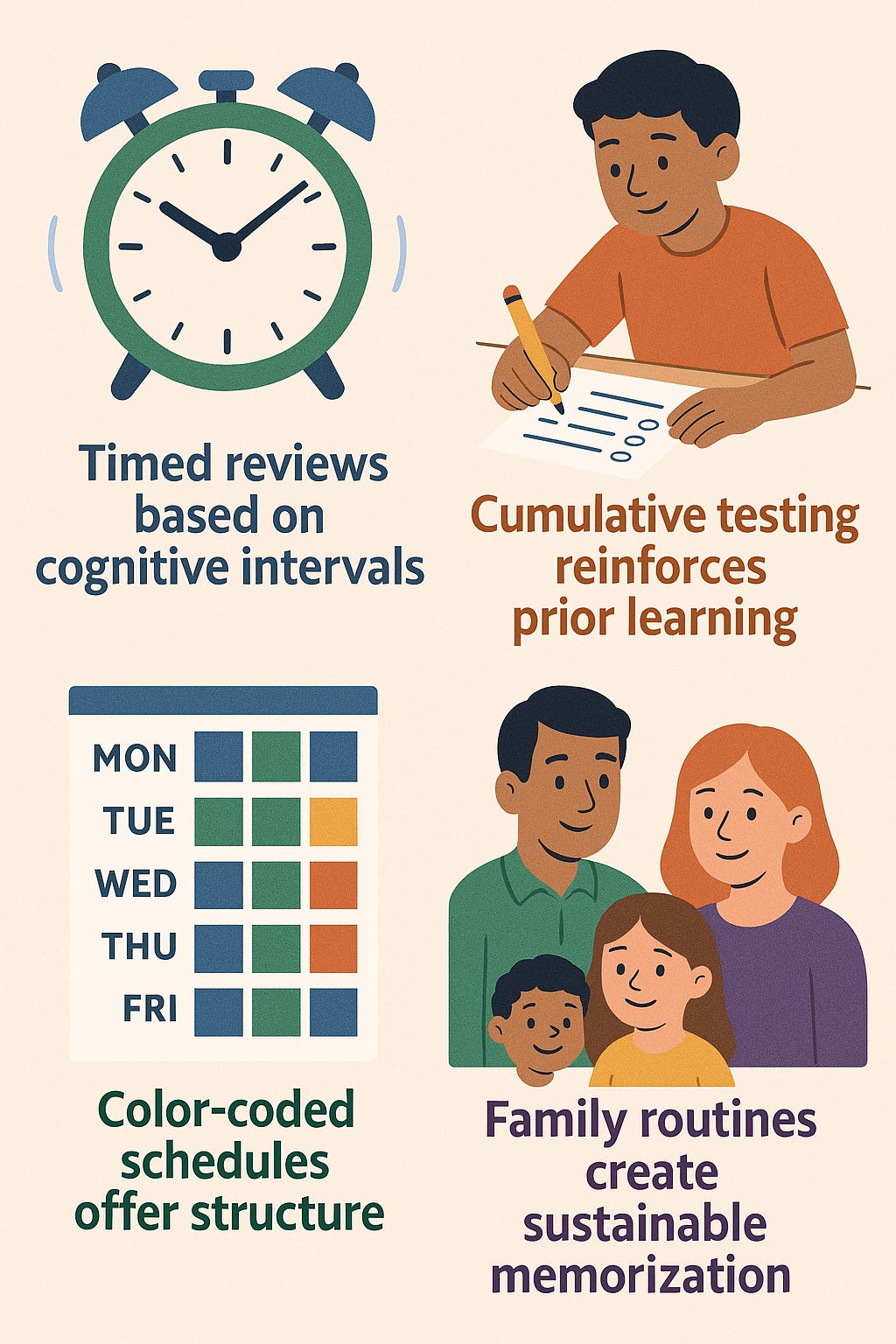
1. Timed reviews based on cognitive intervals
One of the most effective ways to strengthen memory is through timed reviews—returning to previously learned material at specific intervals that align with how memory decays [7]. This technique, known as spaced repetition, works by reviewing information right before it’s likely to be forgotten, which boosts retention and strengthens neural pathways. For Quran memorization, this could look like reviewing a new ayah:
After 10 minutes
Again the next day
Then two days later
And once more after a week
Each review interrupts the natural forgetting process and helps lock the information into long-term memory. This method is especially powerful for children, whose brains are still forming foundational memory habits.
2. Cumulative testing reinforces prior learning
Rather than only testing new material, cumulative testing brings previously memorized ayahs or surahs back into focus. This method forces the brain to actively retrieve older content, which research shows is one of the most effective ways to strengthen memory and prevent "drop-off" from earlier surahs. For example, a weekly test might include the current lesson plus a random selection of past ayahs. This keeps the entire memorized portion fresh, connected, and accessible—reducing the common frustration of forgetting earlier portions as new ones are added.
3. Color-coded schedules offer structure
Children thrive on visual clarity. Using color-coded schedules—for new memorization, revision, and rest days—can make Quran learning more organized and less overwhelming [7]. Assigning different colors to different types of tasks gives the child a clear roadmap of what to expect and reduces cognitive load. For example:
Green for new memorization
Blue for revision
Yellow for testing
Red for rest days or reflection
These visual cues help children (and parents) stay consistent, track progress easily, and maintain a balanced rhythm of learning without burnout.
4. Family routines create sustainable memorization
Memorization is not just an individual act—it thrives in the context of family support and routine. When the entire household respects and reinforces a structured time for Quran, it becomes a natural part of daily life. Whether it’s reciting after Fajr together, reviewing in the car, or doing a quick test before bedtime, these shared routines build an environment where memorization is sustained gently and consistently. Over time, this consistency—supported by love and togetherness—becomes more powerful than any external pressure or reward system.
Section 4: Every Child is Unique—Dual Coding and Learning Modalities
While the idea of rigid "learning styles"—such as visual, auditory, or kinesthetic learners—has been widely debated in educational psychology, one concept that continues to hold strong empirical support is Dual Coding Theory, proposed by Allan Paivio in 1971 [6]. Unlike the learning styles model, Dual Coding doesn’t try to categorize learners into types. Instead, it suggests that combining verbal (spoken or written words) with visual input (images, diagrams, or spatial representations) activates two distinct channels in the brain, which enhances encoding and memory retention.
When both of these channels are engaged simultaneously, the brain creates two mental representations of the same information: one linguistic and one visual. These dual traces make the memory more robust, easier to retrieve, and less likely to fade over time. For instance, when a child is learning an ayah and they not only hear it and recite it, but also see it written or connect it with a simple illustration, they are far more likely to remember it.
In the context of Quranic education, Dual Coding can be a powerful tool:
Pairing the recitation of an ayah with finger-tracing on a mushaf
Using symbolic drawings to represent meanings of keywords
Displaying word maps or flowcharts to visually break down longer verses
All of these strategies allow the child’s brain to anchor the information in multiple forms, which reinforces learning and enhances long-term retention [6].
What Helps:
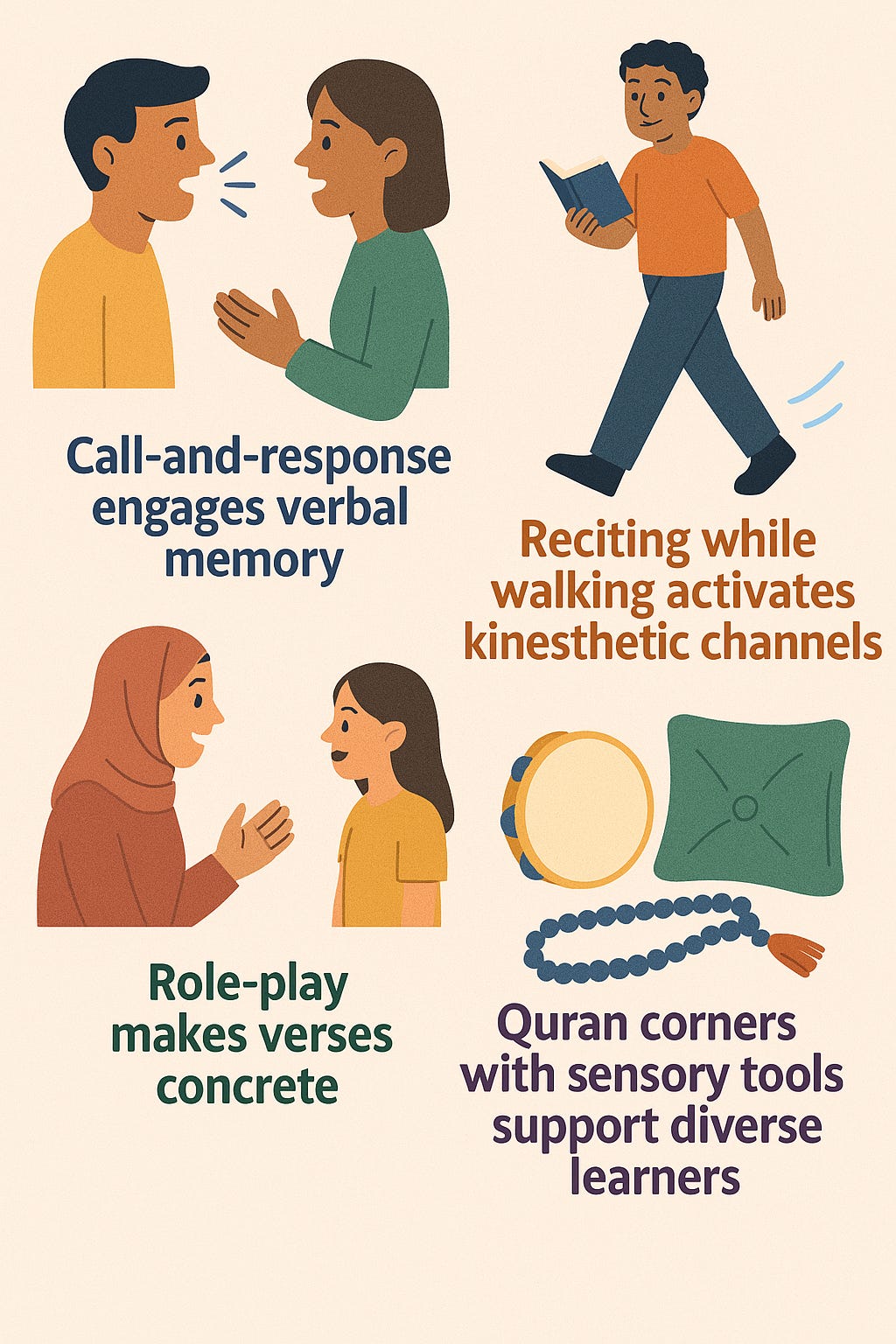
1. Call-and-response engages verbal memory
The call-and-response technique—where a teacher or parent recites a phrase and the child immediately repeats it—activates the brain’s verbal memory system, a key component of auditory learning. This technique is especially effective for early learners and mimics natural language acquisition. By hearing, processing, and repeating, the child strengthens their phonological loop, a core part of working memory that handles verbal information. Over time, the rhythm and repetition of this method build familiarity and fluency with the ayah, while also boosting confidence through immediate success.
2. Reciting while walking activates kinesthetic channels
Reciting Quran while gently walking, pacing, or even swaying engages the kinesthetic learning channel—a principle supported by Dual Coding Theory [6]. Movement isn't just a physical outlet; it actually helps some children focus better and encode information more deeply. Physical activity can stimulate the brain’s hippocampus and motor areas, which are involved in both movement and memory. For kinesthetic learners in particular, pairing memorization with light, rhythmic motion can turn passive learning into a whole-body experience that sticks.
3. Role-play makes verses concrete
Role-playing or acting out the meaning of a verse helps children move beyond abstract words and into meaningful understanding. For example, if an ayah talks about kindness, the child might act out a scenario where they help a friend or share food. This method supports experiential learning by allowing the child to emotionally and physically engage with the concepts being taught. It deepens semantic encoding, because the child isn’t just hearing or reading—they’re doing, which creates lasting impressions and personal connections to the verse.
4. Quran corners with sensory tools support diverse learners
Creating a dedicated Quran corner—a calm, inviting space with sensory-friendly tools—can be especially supportive for children with diverse learning needs. Tactile tools like textured prayer mats, visual schedules, soft lighting, or Quranic flashcards with visuals help engage multiple sensory pathways, enhancing focus and retention. According to Dual Coding Theory, combining these visual and physical cues with auditory recitation boosts memory by engaging different areas of the brain simultaneously [6]. For neurodivergent children or those with attention challenges, these personalized spaces create an environment where Quran learning feels safe, accessible, and even joyful.
Section 5: Teaching the Quran Through the Lens of Neurodiversity
Not every brain is wired the same—and that’s not a flaw. It’s part of Allah’s intentional and beautiful design. Just as every leaf has a unique pattern, every child has a distinct way of learning, processing, and engaging with the world. Some children may memorize quickly with repetition. Others might need movement, visuals, or meaningful context to truly absorb the Quran. And for children with ADHD, autism, or dyslexia, the path to Quranic learning may look different—but it is no less sacred, no less valid, and no less full of potential [8].
Children with neurodevelopmental differences are entirely capable of forming a deep, personal connection with the Quran. But they often require tailored methods—approaches that work with their brains, not against them. A child with ADHD, for example, may struggle with sustained attention but thrive with short, movement-based memorization intervals. A child with dyslexia may need extra time and multisensory tools to process Arabic script. A child on the autism spectrum might excel in pattern recognition and rhythm but benefit from clear, consistent routines and visual support.
The beauty of the Quran is that it meets every soul—regardless of neurotype. And as caretakers, parents, and educators, our role is to create doorways, not barriers. When we honor the way a child’s brain naturally learns, we align not only with best practices in cognitive science but also with the compassion and inclusivity modeled by the Prophet Muhammad ﷺ.
As research in educational neuroscience grows, we’re learning more about how to support these children through visual aids, movement-based learning, personalized routines, and emotional safety [8]. These aren’t "extra" measures—they are necessary adjustments to ensure that every child has an equal chance to access the beauty and depth of the Quran.
What Helps:
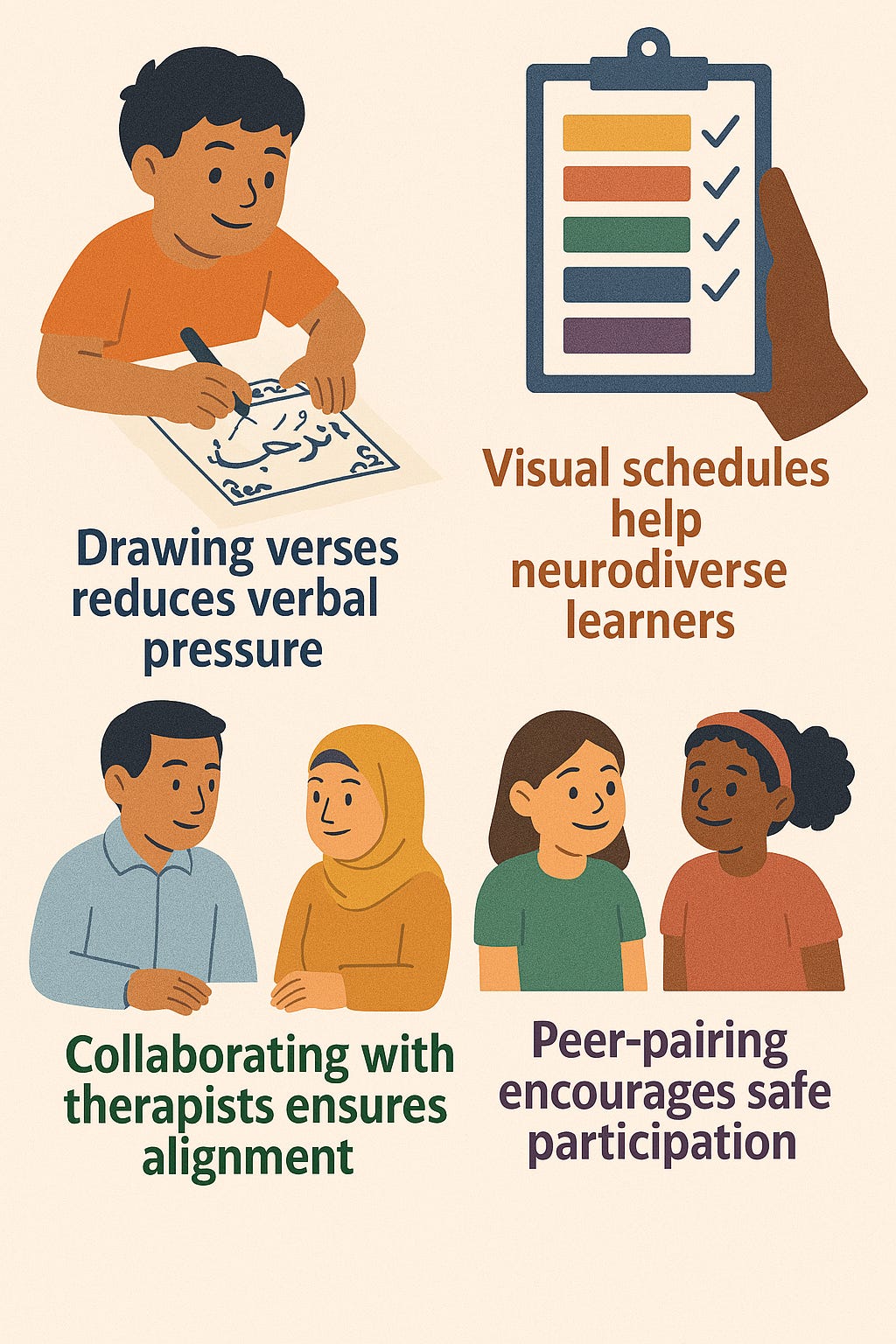
1. Drawing verses reduces verbal pressure
For some children—especially those with speech delays, social anxiety, or language processing challenges—verbal recitation can feel overwhelming. Encouraging them to draw the meaning of an ayah allows them to engage with the Quran in a way that feels safe and accessible. This creative, nonverbal approach activates visual and emotional processing, helping the child internalize the verse without the immediate pressure to pronounce it aloud. It also supports semantic understanding, making the Quran a living, relatable text rather than a purely verbal task. For neurodiverse learners, especially those with autism or dyslexia, this form of expression can reduce cognitive load and increase comprehension [8].
2. Visual schedules help neurodiverse learners
Predictability and routine are especially helpful for children with ADHD, autism, and other learning differences. Using visual schedules—with icons or color-coded blocks to represent Quran time, breaks, movement, and review—provides structure, reduces anxiety, and increases independence [8]. Instead of relying solely on verbal instructions, these children can see what’s coming, prepare themselves mentally, and transition more smoothly between tasks. Visual schedules not only improve engagement but also build executive functioning skills like planning and time management.
3. Collaborating with therapists ensures alignment
When working with children who have specific developmental or learning diagnoses, collaborating with their therapists—such as occupational therapists, speech-language pathologists, or behavioral specialists—can make a significant difference. These professionals understand the child’s sensory, emotional, and cognitive profile and can offer custom strategies that align Quran learning with ongoing developmental goals. This multidisciplinary approach ensures that Quran education is not in a separate silo, but integrated meaningfully into the child’s broader learning and growth journey [8]. It also reassures families that the learning environment is not only spiritually enriching but developmentally supportive.
4. Peer-pairing encourages safe participation
Neurodiverse children often benefit from peer models—classmates or siblings who can support, encourage, and create a sense of safety during Quran sessions. Peer-pairing, when done with care and supervision, fosters inclusion and reduces feelings of isolation or inadequacy. Whether it's reciting together, reviewing surahs in a fun back-and-forth style, or practicing tajweed rules, a compassionate peer can make the learning process more relaxed and relational. This social scaffolding boosts both confidence and motivation, creating a positive environment where every child feels like they belong [8].
Section 6: Emotional Learning—Why the Heart Remembers What the Brain Forgets
Emotion shapes memory. According to McGaugh (2004), emotional arousal strengthens memory consolidation through the amygdala [5]. When a child connects an ayah to personal feelings—like awe, comfort, or wonder—it triggers deeper encoding. The Quran, rich in emotional narrative and divine rhythm, naturally lends itself to this process, embedding verses not just in the mind, but in the heart [5].
What Helps:
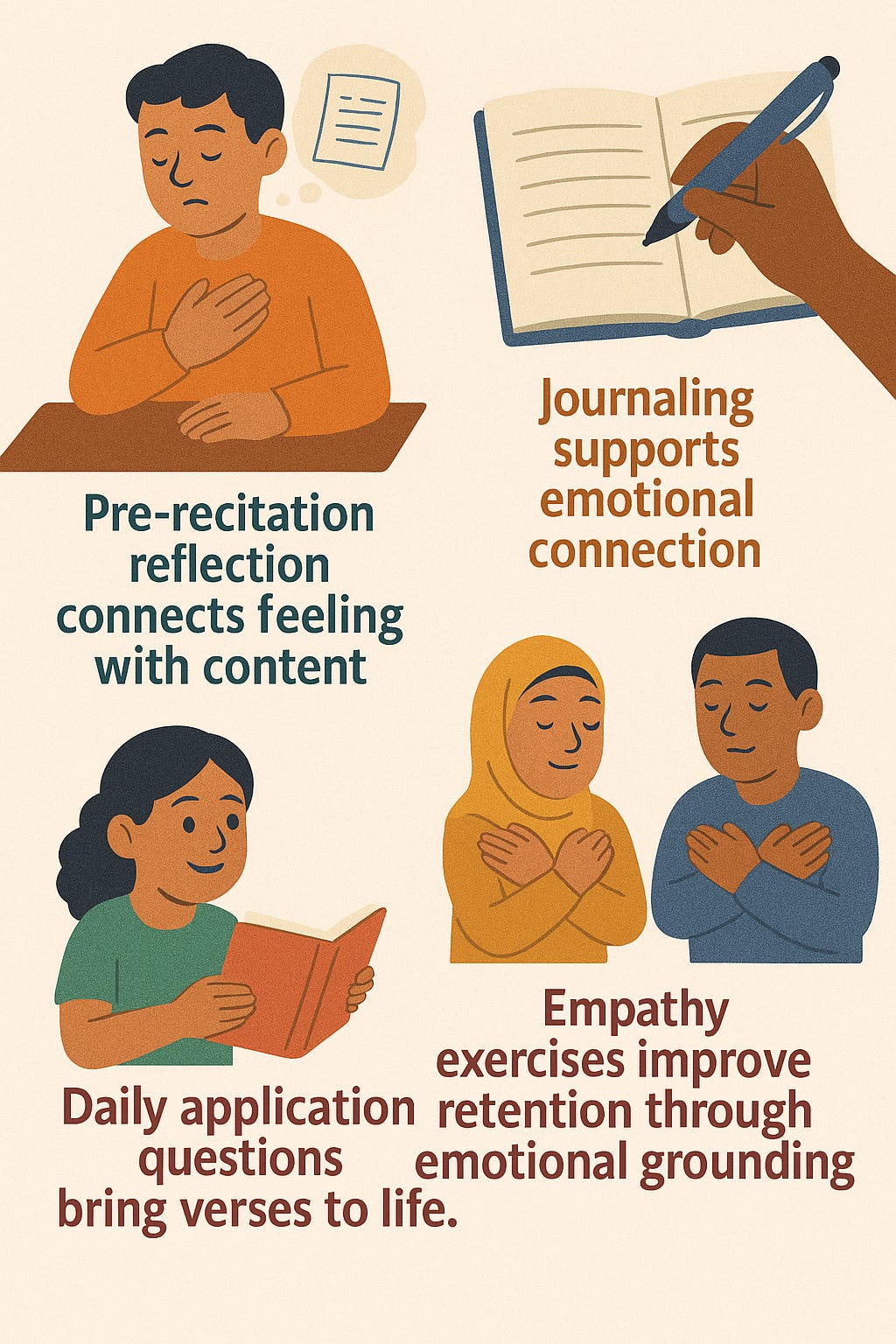
1. Pre-recitation reflection connects feeling with content
Taking a moment before reciting to reflect on the meaning or context of an ayah primes the brain for emotional engagement. This emotional arousal activates the amygdala, enhancing memory consolidation during recitation [5].
2. Journaling supports emotional connection
Writing about how a verse relates to personal experiences helps children internalize its message. Journaling transforms passive memorization into active, emotionally rooted learning [5].
3. Daily application questions bring verses to life
Asking questions like “How can I act on this today?” makes the Quran relevant to a child’s everyday world. This sense of meaning increases emotional resonance and strengthens retention [5].
4. Empathy exercises improve retention through emotional grounding
Discussing how others might feel in Quranic stories or situations builds emotional insight. This empathetic engagement boosts amygdala activity, reinforcing long-term memory pathways [5].
Section 7: The Role of Sleep, Nutrition, and Environment in Quranic Retention
Cognitive performance is deeply influenced by biological and environmental factors. Memory consolidates during sleep [11], nutrients like omega-3 enhance brain function [10], and stress (from high cortisol) impairs retention [10].
What Helps:
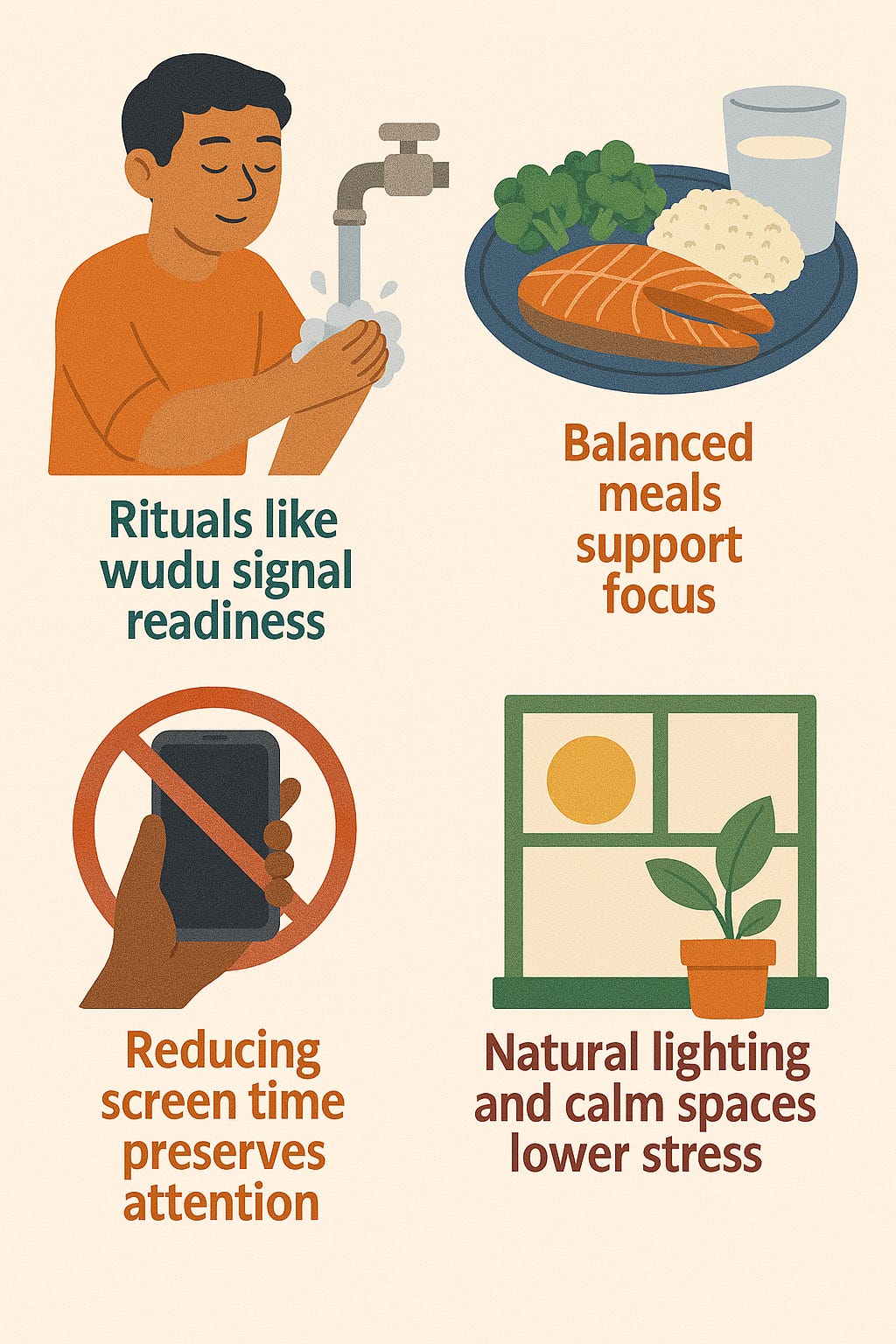
1. Rituals like wudu signal readiness
Performing wudu before Quran study creates a mental and spiritual transition into focus mode. This ritual acts as a cue, signaling the brain that it’s time to shift into learning and presence [10].
2. Balanced meals support focus
Nutrition plays a key role in cognitive function—meals rich in proteins, healthy fats, and complex carbs help stabilize energy and attention. A well-nourished brain is better equipped to absorb and retain Quranic content [10].
3. Reducing screen time preserves attention
Limiting screen exposure, especially before memorization, reduces mental clutter and distraction. A calmer cognitive environment improves a child’s ability to stay engaged and present during lessons.
4. Natural lighting and calm spaces lower stress
Studying in spaces with natural light and minimal noise lowers cortisol levels and enhances concentration. A stress-free environment helps create positive associations with Quran learning [10].
Living the Quran Beyond the Page
The Quran itself acknowledges the process of learning and retention:
“And We have certainly made the Quran easy for remembrance, so is there any who will remember?” (Surah Al-Qamar 54:17)
Memorizing the Quran isn’t just about repetition—it’s about understanding how the brain works and using those insights to create a more effective and enjoyable learning experience.
We’d love to hear from you! Have you noticed certain methods working better for your child? Do you struggle with any Quran memorization challenges? Let’s discuss in the comments below!
📅 Stay tuned for next Thursday’s article: “ADHD and Quran Learning: Strategies for Focus and Retention.”
📚 References
Baddeley, A. D. (2000). The episodic buffer: a new component of working memory? Trends in Cognitive Sciences, 4(11), 417–423.
Cowan, N. (2001). The magical number 4 in short-term memory: A reconsideration of mental storage capacity. Behavioral and Brain Sciences, 24(1), 87–114.
Craik, F. I., & Tulving, E. (1975). Depth of processing and the retention of words in episodic memory. Journal of Experimental Psychology: General, 104(3), 268–294.
Ebbinghaus, H. (1885). Memory: A Contribution to Experimental Psychology. Teachers College, Columbia University.
McGaugh, J. L. (2004). The amygdala modulates the consolidation of memories of emotionally arousing experiences. Annual Review of Neuroscience, 27, 1–28.
Paivio, A. (1971). Imagery and verbal processes. Holt, Rinehart, and Winston.
Cepeda, N. J., Pashler, H., Vul, E., Wixted, J. T., & Rohrer, D. (2006). Distributed practice in verbal recall tasks: A review and quantitative synthesis. Psychological Bulletin, 132(3), 354–380.
Journal of Special Education Technology. (2021). Volume 36, Issue 2.
Sweller, J. (1988). Cognitive load during problem solving: Effects on learning. Cognitive Science, 12(2), 257–285.
Gómez-Pinilla, F. (2008). Brain foods: the effects of nutrients on brain function. Nature Reviews Neuroscience, 9(7), 568–578.
Walker, M. P., & Stickgold, R. (2006). Sleep, memory, and plasticity. Annual Review of Psychology, 57, 139–166.