

Introduction- Speech And Silence
It all began with a single, powerful word: “Bismillah.” For little Safiya, a two-year-old child recently diagnosed with a moderate speech delay, that word carried more weight than anyone could have imagined. It wasn’t "mama," nor "baba," nor any of the other basic words her parents had been waiting desperately to hear. Instead, it was this sacred invocation—"In the name of Allah"—that broke the silence. The moment unfolded during an ordinary family dinner, when Safiya, who usually sat quietly at the table, suddenly looked up and clearly pronounced the word her parents would later describe as a divine gift.
Safiya’s parents had spent months in uncertainty, observing their child struggle with communication milestones that many children her age achieved effortlessly. They had tried everything—pointing to objects, repeating simple phrases, using flashcards, singing songs—hoping she would respond with speech. But the words didn’t come. Until that evening. When Safiya softly said “Bismillah” with unexpected clarity and presence, it felt like a moment of sacred intervention. Her mother’s eyes welled up with tears, later describing the experience not just as progress in speech, but as a deeply spiritual reassurance—a sign that their daughter’s voice had not vanished but had simply been waiting for the right word to emerge.
Moments like these challenge conventional assumptions about language development. They raise meaningful and powerful questions for both science and faith:
Could early exposure to Quranic sounds and phrases support a child’s speech development?
Might the melodic cadence and rhythmic structure of the Quran play a role in nurturing the pre-verbal brain?
And most importantly, can the spiritual resonance of sacred recitation act as a bridge toward spoken communication, especially in children who are late to speak?
These are not merely abstract inquiries. In recent years, a growing number of Muslim families, early childhood educators, speech-language pathologists, and developmental researchers have begun to examine these questions more seriously. They are exploring the profound intersection between Islamic pedagogy—which has long emphasized the value of sound, repetition, and rhythm in Quranic learning—and modern developmental science, which continues to uncover how language acquisition is shaped in the earliest years of life.
This lens seeks to explore that very intersection with depth, nuance, and care. Drawing upon recent findings in neuroscience, child development, and language acquisition, along with foundational perspectives from Islamic tradition, it aims to provide both a scholarly and heart-centered exploration of how Quranic recitation may influence early language development. It also includes insights specifically tailored for Muslim mothers navigating the challenges of speech delays, as well as for speech-language professionals who want to integrate faith-based practices in a therapeutic, culturally informed manner.
Ultimately, by understanding how the sacred rhythms of the Quran interact with a child’s developing brain, we can begin to imagine new pathways for supporting children like Safiya. Pathways that are not only therapeutic but also spiritually enriching. And in doing so, we open the door to a possibility that the very first words a child speaks—even amid speech delays—may be a reminder that their voice, like their fitrah (innate nature), is always in tune with something higher.unde
Problem Statement: Understanding the Science Behind Speech Delays
Speech delays occur when a child does not begin speaking or developing verbal skills within the typical age range expected for their development. This means the child may speak fewer words, struggle to form clear sounds, or have difficulty making themselves understood, even as peers begin to communicate more effectively.
According to the Centers for Disease Control and Prevention (CDC), it’s essential to differentiate between speech delays and language delays, as each affects a child in different ways and requires tailored support strategies. A speech delay refers specifically to problems with the physical act of producing speech—this includes difficulties with articulation (how sounds are formed), voice (tone and volume), and fluency (smoothness of speech). In contrast, a language delay is broader and involves trouble understanding what is being said or using words and sentences to communicate thoughts effectively. For example, a child with a language delay might not respond to their name, struggle to follow simple instructions, or have trouble combining words into phrases or sentences appropriate for their age [1].
The American Speech-Language-Hearing Association (ASHA) provides further clarity by describing common signs of each type of delay. Children with a speech delay might:
Omit or mispronounce certain sounds (e.g., saying “tat” instead of “cat”),
Exhibit limited speech clarity,
Or show signs of stuttering or disruptions in speech flow.
Meanwhile, children with a language delay may:
Speak in shorter sentences than peers of the same age,
Struggle with grammar or sentence structure,
Have trouble understanding questions or concepts,
Or use a limited vocabulary that doesn’t grow steadily over time.
It is also important to understand that speech and language delays can exist independently or together. For instance, a child may clearly articulate a few words but not understand how to use them in meaningful ways, or vice versa.
There is also a broader diagnostic category known as developmental delay, which may include challenges in multiple domains of a child’s growth—speech and language, yes, but also motor skills, cognitive development, and social-emotional functioning. Developmental delays may be caused by identifiable medical or neurological conditions (such as autism spectrum disorder, Down syndrome, or cerebral palsy), or they may appear in children who were born prematurely or had complicated births [2].
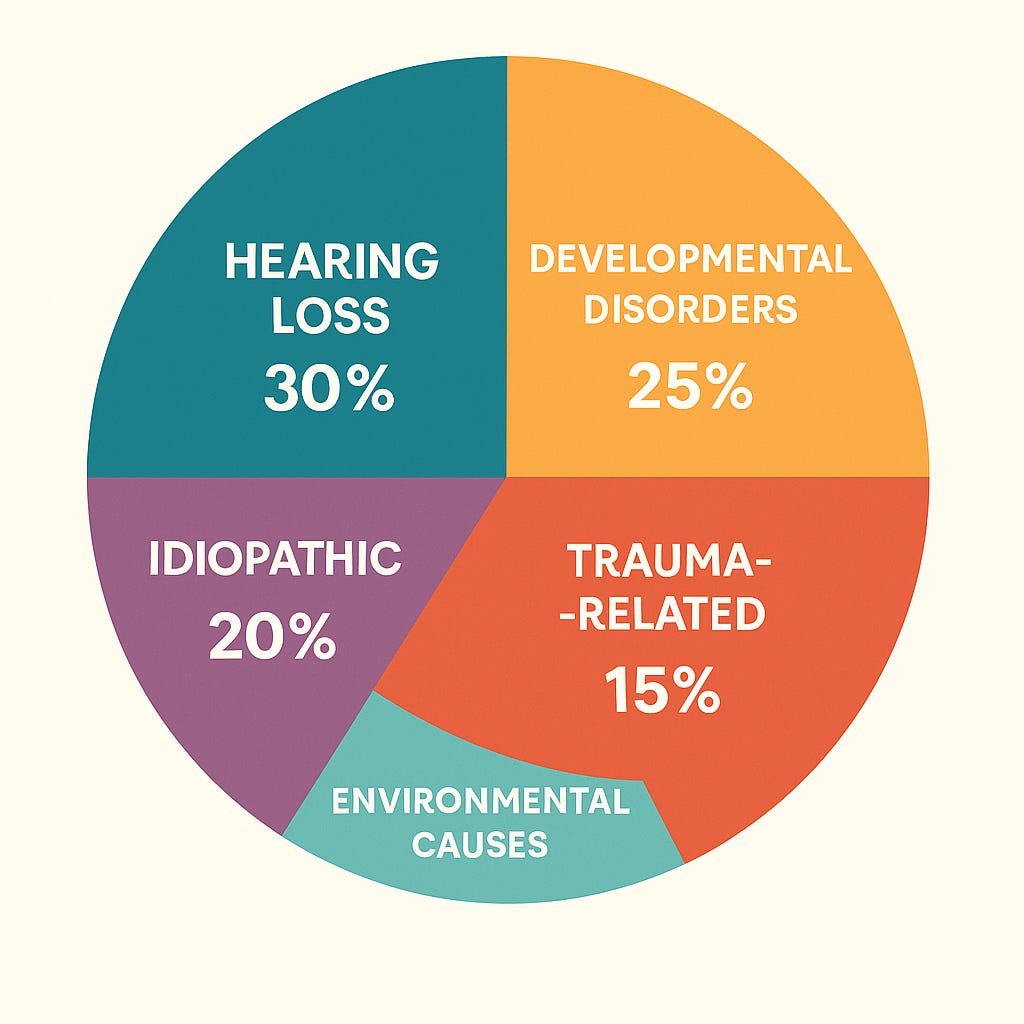
Speech delays, specifically, are more widespread than many parents initially realize. Research estimates that approximately 8–10% of preschool-aged children are affected by some form of speech delay [3]. While some of these cases are linked to underlying conditions—such as hearing impairments, neurological disorders, or environmental factors like limited verbal interaction at home—others remain without a clear cause. These are often referred to as idiopathic delays, meaning no specific medical or developmental condition has been identified.
Recognizing the potential causes behind a child’s delayed speech is crucial not only for diagnosis but also for intervention. Early identification and support—through speech-language therapy, parent-guided interaction techniques, or early intervention programs—can significantly improve long-term communication outcomes. However, many Muslim families are now exploring an additional layer of support: the potential role of Quranic recitation in fostering early speech development.
Though Quran recitation is not a substitute for medical or therapeutic care, its structured rhythm, melodic tone, and repetitive patterns offer a uniquely rich auditory environment that may stimulate a child’s brain in powerful ways. For some children, especially those raised in spiritually nurturing homes, listening to or mimicking Quranic sounds might even serve as a bridge to verbal communication—unlocking words when other methods seem to stall.
This perspective does not suggest abandoning traditional treatment options. Instead, it invites parents, educators, and therapists to consider how Islamic practices—deeply rooted in sound, memory, and rhythm—might support a child’s holistic development, including speech.
The Qur’an as Therapy? Exploring Its Role in Early Brain and Language Development
Quranic recitation holds profound spiritual significance for Muslims around the world—but beyond its religious and emotional resonance, it also offers a rich and structured auditory experience. Increasingly, researchers and educators are beginning to appreciate the developmental value of this sacred soundscape, particularly in relation to early childhood language development.
For children experiencing speech delays, Quranic recitation may do more than soothe the soul—it may serve as a form of natural auditory therapy. This is because many of the characteristics that make Quranic recitation spiritually moving also happen to be clinically beneficial for language processing. These include:
Structured rhythm
Melodic intonation and musicality
Precise articulation of phonemes
Repetitive sound patterns
Each of these elements closely mirrors techniques used in modern music therapy and speech-language interventions. The rhythmic, melodic, and patterned nature of recitation can provide the kind of repetitive auditory input that helps the brain build and strengthen neural pathways involved in listening, language comprehension, and verbal output.
What Neuroscience Tells Us
Scientific research strongly supports the idea that auditory input in the early years plays a critical role in shaping a child’s language capacity. From the very first months of life, infants and toddlers are neurologically attuned to sound, especially when that sound is rhythmically and melodically organized.
Studies in developmental neuroscience have shown that babies can detect and respond to the musical contours of speech—they are able to notice pitch changes, stress patterns, and intonation even before they comprehend words. These early responses are believed to form the foundation for future speech and language development [4].
One well-established therapeutic approach that builds on this concept is Melodic Intonation Therapy (MIT). Originally developed to help stroke patients and individuals with aphasia, MIT uses melody and rhythm to access and activate the language centers of the brain, particularly in the right hemisphere, which processes musical elements [5]. Children with speech delays often benefit from similar techniques, as they provide an alternative route to language—one that bypasses traditional linguistic channels and stimulates the brain through rhythmic and tonal pathways.
Quranic recitation naturally contains many of the same acoustic features emphasized in such therapies. The rhythmic patterns, intonation styles (maqamat), and measured pauses in tajweed rules offer an immersive auditory experience that can entrain the brain—helping children internalize the sounds, rhythms, and structures of language.
Brain Imaging Studies: What Happens During Quran Recitation?
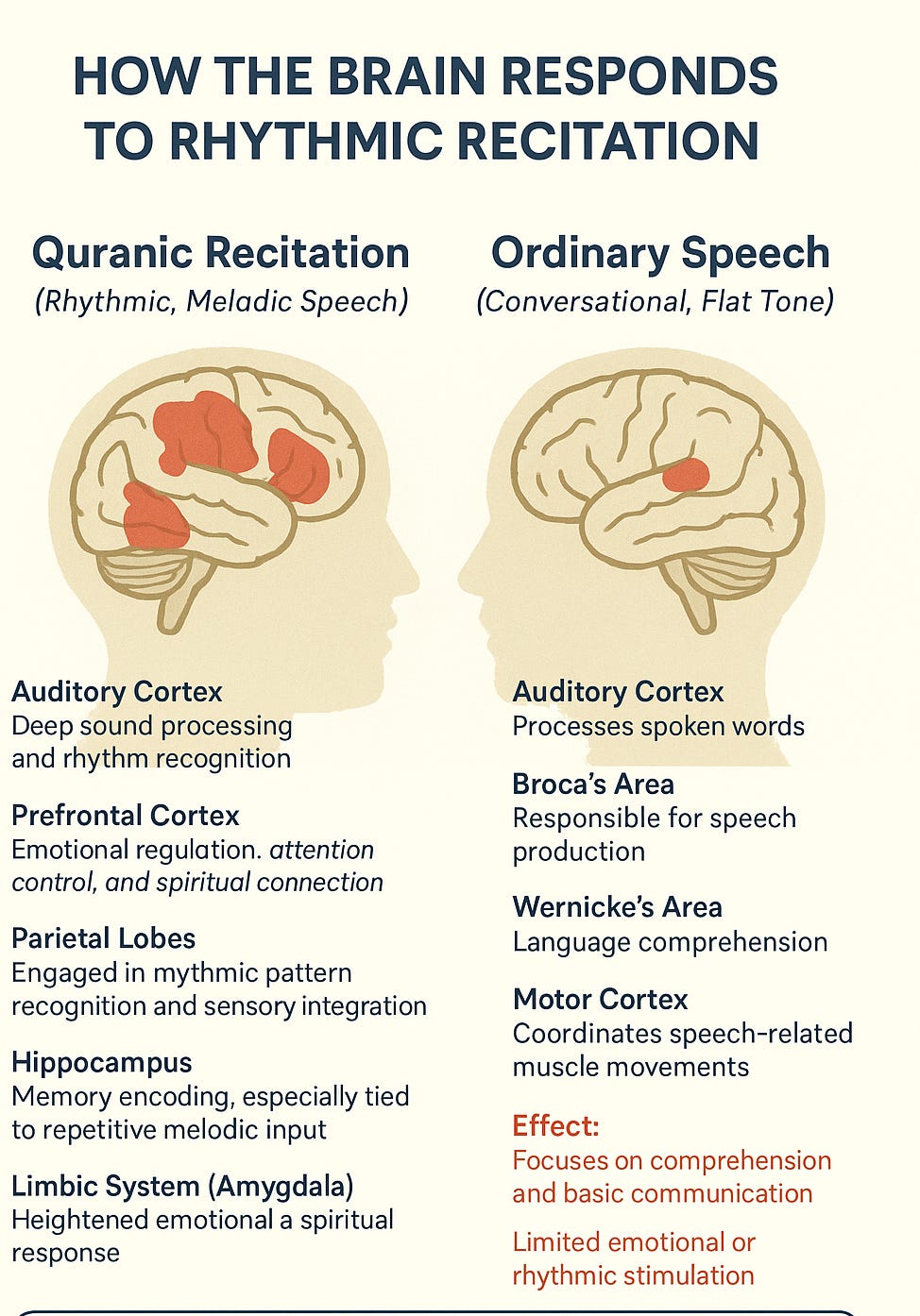
Emerging findings from functional MRI (fMRI) and electroencephalogram (EEG) studies shed light on the brain’s response to Quranic recitation. Researchers have found that listening to the Quran activates several key regions in the brain, including:
The primary auditory cortex, which processes sound
The hippocampus, associated with memory formation
The amygdala, which processes emotion
The prefrontal cortex, involved in attention and executive function [6]
These brain regions overlap substantially with those activated during speech therapy and music therapy sessions. This overlap is especially relevant for children facing delays in speech production, as it suggests that Quranic recitation may function similarly—priming the brain for language by stimulating its auditory and linguistic centers in a harmonious and structured way.
The implications are promising. While Quran recitation should not replace formal speech therapy where it is needed, it can serve as a complementary tool, especially in Muslim households where the Quran is already a central part of daily life. Regular exposure—whether through listening, reciting, or engaging in gentle repetition with a parent—may reinforce the phonemic awareness, pattern recognition, and auditory sequencing skills essential for spoken language.
Pre-Verbal Quranic Learning in Muslim Homes
In many Muslim households, children begin their relationship with the Quran not through formal study, but through sound—gentle, rhythmic, and ever-present. Long before they utter their first structured sentences, they are wrapped in an auditory environment shaped by sacred verses. Surah Al-Fatiha whispered as a lullaby, soft Quran recitation playing in the background during bedtime routines, or the calm rhythm of a parent’s voice reciting while cooking or driving—these moments form a subtle but powerful soundscape that envelops a child’s early world.
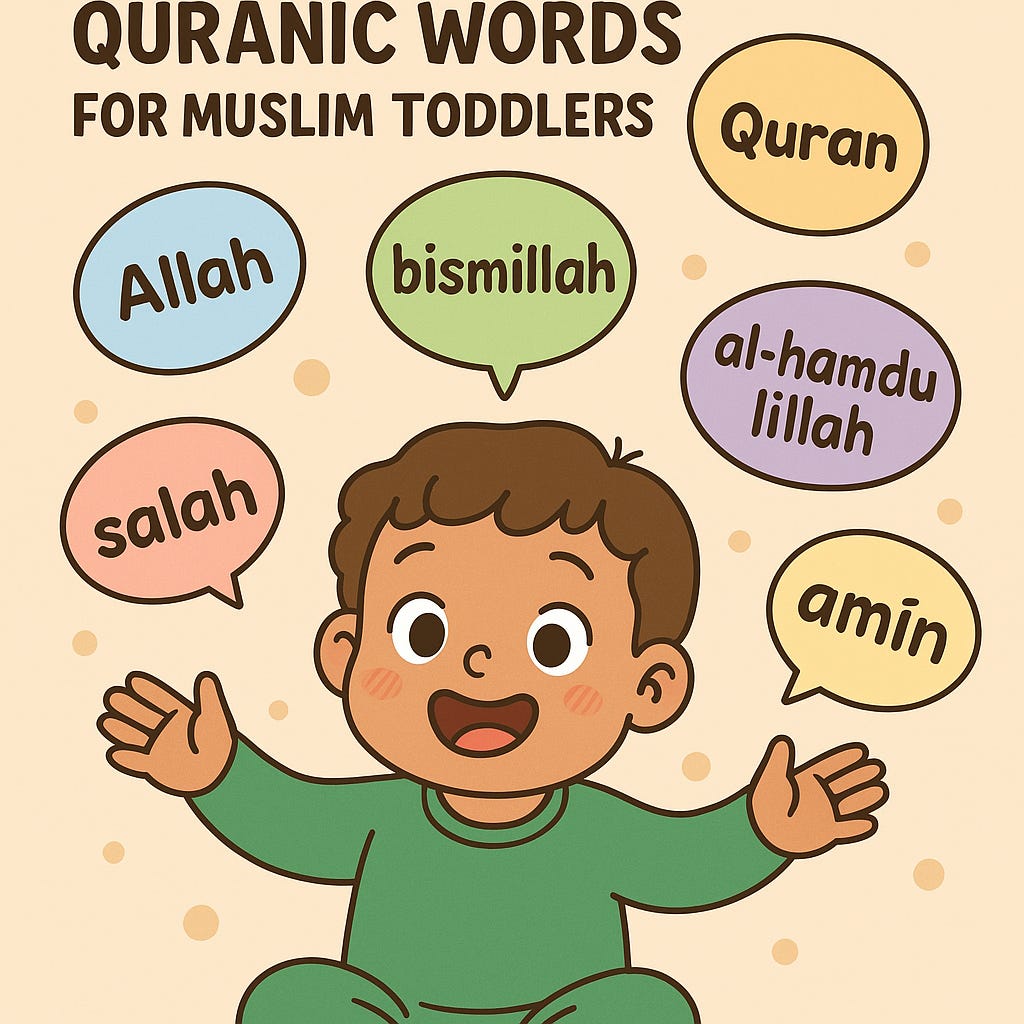
What’s particularly remarkable is that many children begin to echo this divine soundscape before they learn to say common early words like “mama” or “baba.” Among some of the first vocalizations you might hear are not typical baby babbles, but instead sacred words like “Allah,” “Qul,” and “Bismillah.” These sounds emerge not with full comprehension but with surprising clarity and repetition—often catching parents off guard and filling their hearts with awe and gratitude.
This phenomenon has been described by some educators and caregivers as “spiritual babbling”—a term that captures the blend of instinctive imitation and spiritual resonance. Developmentally, this type of echoing is far from meaningless. On the contrary, it plays a critical role in laying the groundwork for phonemic awareness—a child’s ability to hear, distinguish, and eventually manipulate individual sounds (phonemes) within speech.
Phonemic awareness is considered one of the most essential building blocks for both spoken communication and early literacy. Children who are exposed to rhythmic, patterned language—whether through nursery rhymes or Quranic recitation—are more likely to develop strong sound recognition skills. The Quran, with its distinct cadences, elongations, and phonetic precision, becomes a rich linguistic training ground for the young brain [7].
But the benefit isn’t just linguistic—it’s deeply emotional as well.
When a child says “Allah” or “Bismillah,” even unintentionally, and sees their parents respond with smiles, hugs, or joyful praise, the moment becomes deeply rewarding. These small interactions do more than encourage language—they build a sense of emotional security and relational bonding. The child begins to associate speech with connection, with joy, with love. This dynamic forms a positive feedback loop, where emotional encouragement leads to more speech attempts, which in turn bring more encouragement. For a speech-delayed child, this loop can be especially transformative, offering motivation and reinforcement in ways traditional speech drills sometimes cannot.
Moreover, these early utterances often carry spiritual meaning for parents as well. Hearing a child speak the name of Allah, even before mastering family names, can feel like a sign—a gentle reassurance that the child's voice is not lost but finding its way through sacred sounds. For Muslim families navigating the challenges of speech delay, this deeply emotional experience offers not only hope, but also a sense of divine closeness in the journey.
Research-Based Strategies and Solutions for Parents
When a child experiences speech delay, parents are often left searching for answers, support, and strategies that feel both effective and aligned with their values. For Muslim families, the Quran can offer more than just spiritual solace—it can actively support a child’s language journey in developmentally meaningful ways. Below are four deeply detailed, research-informed strategies to help you integrate Quranic practices into your child’s speech development in a way that is gentle, enriching, and rooted in love.
A. Immerse Your Child in Quranic Soundscapes Early On
Why it matters:
The human brain develops most rapidly in the first three years of life, and auditory input plays a critical role in shaping the brain’s speech and language centers. When children are exposed to rich, patterned, and emotionally meaningful sound environments early on, they develop stronger neural pathways associated with phonemic awareness, auditory memory, and speech production.
Why Quranic recitation is uniquely beneficial:
Unlike random background noise, Quranic recitation is structured, rhythmic, melodic, and emotionally significant. These features are essential in stimulating early brain regions responsible for language. Studies show that repetitive, emotionally soothing auditory input not only improves memory for sound but also primes the brain for imitation—a precursor to speech [1].
How to do it:
Choose short and easy-to-pronounce Surahs like Al-Ikhlas, Al-Falaq, and An-Naas.
Play these during everyday, low-pressure routines: bath time, diaper changes, bedtime, or while dressing.
Recite aloud gently in a calm, slow tone, allowing your child to hear the articulation and rhythm clearly.
Why it works:
When a child repeatedly hears these verses in emotionally safe, predictable settings, the sounds become familiar and comforting. Over time, familiarity turns into anticipation—and anticipation into spontaneous mimicry. Even if your child isn’t speaking words yet, their brain is absorbing, storing, and preparing to produce the patterns they’re immersed in.
B. Pair Quranic Words with Daily Actions (Multi-Sensory Learning)
Why it matters:
Children learn best when language is tied to real-life sensory experiences. When a word is paired with a physical action, it activates multiple areas of the brain simultaneously—visual, auditory, motor, and emotional—thereby strengthening memory and recall. This approach, known as multi-sensory learning, is commonly used in early childhood education because of its proven impact on vocabulary development.
Why this is powerful in a Quranic context:
Quranic phrases are already part of Muslim routines—but they often go unlinked from physical interaction in a child’s early life. Pairing those phrases with specific, repeated actions transforms them into meaningful, experiential language, rather than abstract sounds.
How to do it:
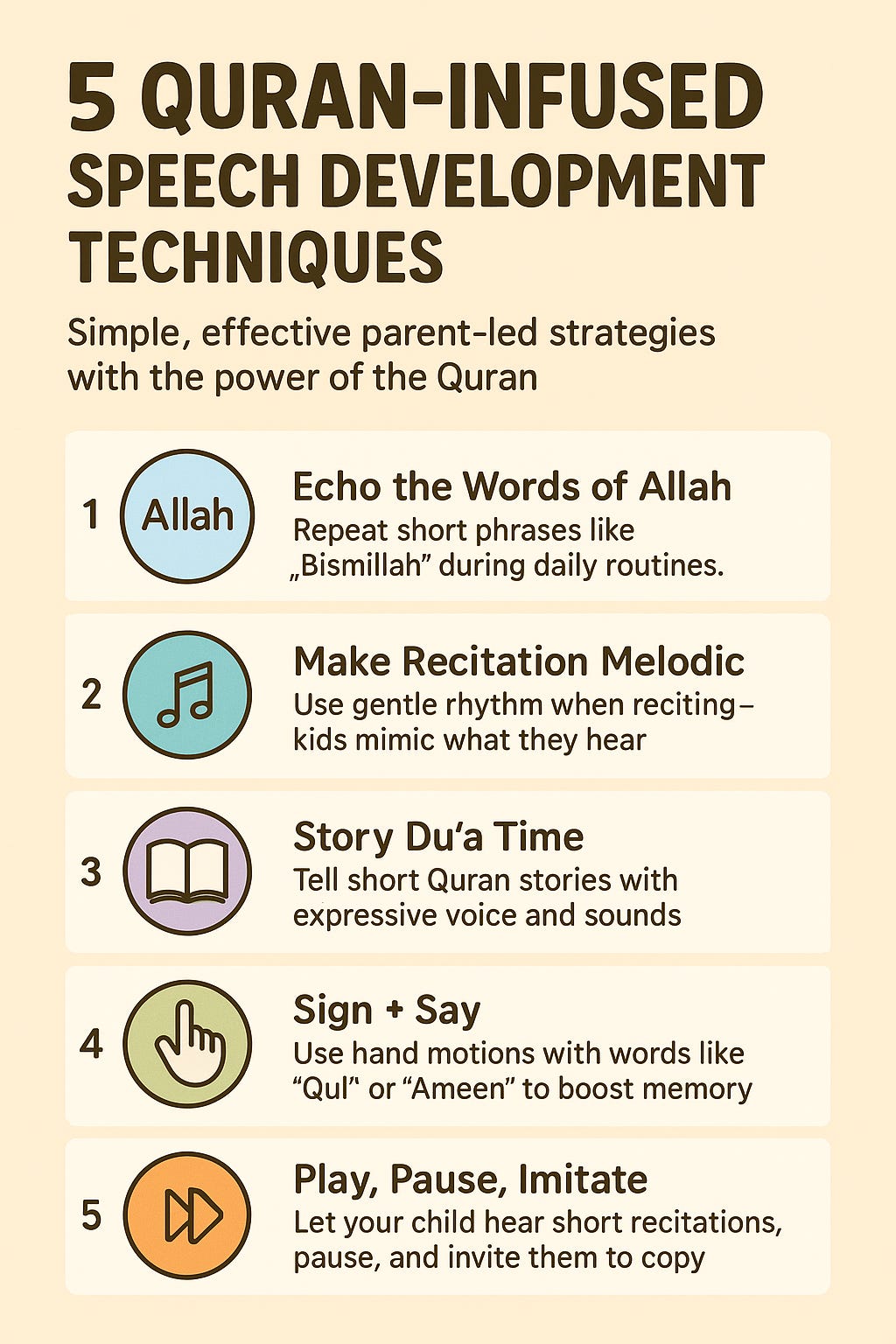
Say “Bismillah” every single time you offer food or water—make eye contact, smile, and hand the item to your child.
When lifting your child up to play, cheerfully say “Allahu Akbar!” to associate joy and movement with a sacred phrase.
After they sneeze or after any pleasant moment (even giving them a toy), say “Alhamdulillah” and pat their back gently.
Why it works:
When language is connected to actions, emotional expression, and physical touch, it becomes embedded more deeply in a child’s brain. Over time, they don’t just hear the word—they feel its meaning. This emotional-physical-word connection leads to stronger recall and more confident verbal expression. For speech-delayed children, this bridges the gap between hearing and speaking.
C. Encourage “Spiritual Babbling” Without Demanding Perfection
Why it matters:
Before a child can speak fluently, they must first explore sound through babbling and sound play. For children with speech delays, babbling can last longer than usual—but it’s an important stage, not one to be rushed or dismissed. In fact, how caregivers respond to early, imperfect speech attempts dramatically affects whether a child feels confident enough to keep trying.
What is “spiritual babbling?”
Many Muslim parents report that their children, even before saying “mama” or “dada,” begin to babble sounds from Quranic recitation—“Bismi,” “Ah-lah,” “Rahma.” While these are not exact words, they reflect early attempts to mimic sacred speech patterns. This is a deeply meaningful sign of auditory memory and emerging articulation.
How to respond:
If your child says “Ah-lah,” respond joyfully: “Yes! Allah! That’s so beautiful!” and smile, clap, or gently repeat the correct phrase.
Avoid correcting with phrases like “No, say it properly” or showing disappointment.
Mirror and build: When they say “Bismi,” you respond with the full “Bismillah!” followed by a kiss or a hug.
Why it works:
Neuroscience confirms that positive reinforcement of even partial or incorrect speech attempts increases brain activation in language centers and strengthens future attempts [2]. Children learn through repetition and encouragement. If their early vocalizations are celebrated, they will feel safe experimenting with new words—even if they’re not perfect.
D. Blend Quranic Practices with Professional Speech Therapy
Why it matters:
For many Muslim families, speech therapy can feel disconnected from the child’s emotional world. But when therapists incorporate elements of the child’s spiritual environment—especially familiar Quranic sounds—they create a bridge between home and clinic, faith and science. This integration increases trust, comfort, and engagement.
How to make it work:
Share with your speech-language pathologist (SLP) a list of Quranic words your child attempts to say: “Allah,” “Bismillah,” “Alhamdulillah,” etc.
Ask if these can be incorporated into articulation or vocabulary exercises during therapy.
Encourage your therapist to use visuals, gestures, or routines tied to Islamic phrases (e.g., using a prayer mat or food prop to say “Bismillah”).
Why it works:
Children are more responsive to content that is familiar, emotionally significant, and culturally relevant. Quranic phrases are already part of the child’s auditory memory—and likely hold emotional value from home rituals. Using them as starting anchors allows the therapist to build from what the child already knows, rather than introducing disconnected vocabulary.
Moreover, culturally informed therapy strengthens parent-therapist relationships. It shows that your child’s full identity—including faith—is respected and welcomed in the therapeutic space, which increases long-term cooperation and progress.
Addressing Parent Concerns
One of the most common and heartfelt concerns expressed by parents of speech-delayed children is this:
“If I focus too much on Quranic words, will it interfere with my child’s professional speech therapy?”
It’s a sincere and important question—and the answer is both comforting and empowering:
No, Quranic exposure does not delay therapy. It enhances it.
Rather than being two separate or competing paths, the sacred and the scientific can work together in harmony. Each offers unique strengths, and when used thoughtfully, they create a holistic support system that nurtures not only speech development but also emotional well-being and spiritual identity.
Two Paths That Strengthen Each Other
Professional speech therapy is designed to target specific developmental goals—correcting articulation, improving fluency, building vocabulary, or enhancing comprehension. It follows evidence-based methods tailored to a child’s needs. This is critical and non-negotiable for children with moderate to severe speech delays.
But at the same time, the home environment plays an equally powerful role in a child’s language journey. And for Muslim families, that environment is often rich with Quranic phrases, daily duas, and sacred expressions that carry emotional depth and cultural meaning.
Integrating Quranic learning at home does not interfere with therapy—it acts as a parallel path, offering:
A familiar and emotionally warm auditory environment
Repetitive and rhythmic language that boosts sound recognition
Daily opportunities for vocal interaction and imitation
A sense of spiritual connection that fosters confidence and identity
When therapists understand that the child is already engaging with speech-rich, meaningful content at home, many actually encourage parents to continue those routines. These parent-led interactions—especially when tied to faith and emotion—can increase a child’s motivation to speak, which is one of the most important elements in effective therapy.
The Power of Imperfect Utterances
Parents sometimes hesitate to encourage Quranic speech at home, especially if their child’s pronunciation isn’t accurate. They worry:
“What if my child says it wrong? Am I confusing them or being disrespectful?”
Here’s the reassurance: perfection is not the goal. Connection is.
When a child—especially one struggling to speak—makes an effort to say “Bismillah” or “Qul”, even if the word is incomplete or mispronounced, that effort carries immense value. Spiritually, it is a beautiful act of remembrance (dhikr), and developmentally, it is a sign of progress, engagement, and emerging articulation.
These early utterances are like bridges—fragile but full of potential—linking the child’s inner world to outer expression. They represent a child reaching toward communication through a medium that already holds meaning in their heart. And when parents respond to these moments with joy, patience, and warmth, they affirm to the child:
“Your voice matters. Your effort matters. And we hear you.”
Empowerment, Not Fear
Parents should feel confident, not cautious, in integrating Quran into their child’s daily routine. The goal is not to replace therapy or to create a competing curriculum. Instead, think of it as offering your child:
A spiritually nurturing environment
Familiar and comforting linguistic input
Emotional closeness through shared rituals
Motivation to use their voice in a safe and loving way
You are not “doing it wrong” by encouraging your child to say “Bismillah” before meals or to echo a Surah during play. On the contrary—you are enriching their world with meaning, rhythm, and love. And that’s exactly the kind of support every speech-delayed child needs.
Conclusion: When Faith Speaks Before Words Do
Speech delays may test a parent’s patience, but they can also deepen a family’s connection—both with one another and with Allah. In the quiet spaces where words have yet to form, the gentle rhythms of the Quran can serve as a child’s first language: not of fluency, but of familiarity, comfort, and sacred sound.
Science reminds us that early auditory exposure shapes the brain’s ability to speak. Faith reminds us that every sound made in remembrance of Allah, no matter how small or imperfect, is valuable. When these two truths meet—when the sacred and the scientific are allowed to walk hand in hand—a new path opens for children with speech delays. A path where healing is not just clinical, but spiritual. A path where a whispered “Bismillah” might carry more power than a thousand perfect words.
For Muslim parents navigating this journey, know this: you are not alone, and you are not without tools. Every verse you play, every gentle correction you offer with love, every smile when your child babbles “Qul”—these are not small things. They are acts of devotion and development woven together. They are how voices find their way.
So keep reciting. Keep responding. Keep believing.
Because sometimes, the first word a child speaks isn’t just sound—it’s a sign.
References
[1] Centers for Disease Control and Prevention (CDC). “Language and Speech Disorders in Children.” CDC.gov, 2023.
[2] American Speech-Language-Hearing Association (ASHA). “Speech and Language Disorders.” ASHA.org, 2023.
[3] Nelson, H. D., Nygren, P., Walker, M., & Panoscha, R. “Screening for Speech and Language Delay in Preschool Children.” Pediatrics, vol. 117, no. 2, 2006, pp. e298–e319.
[4] Trainor, L. J., & Desjardins, R. N. “Pitch Characteristics of Infant-Directed Speech Affect Infants' Ability to Discriminate Vowels.” Psychonomic Bulletin & Review, vol. 9, no. 2, 2002, pp. 335–340.
[5] Norton, A., Zipse, L., Marchina, S., & Schlaug, G. “Melodic Intonation Therapy: Shared Insights on How It Is Done and Why It Might Help.” Annals of the New York Academy of Sciences, vol. 1169, 2009, pp. 431–436.
[6] Hashi, A. Y., & Farah, A. M. “Quranic Recitation as Cognitive and Emotional Stimuli in Infants: A Brainwave Study.” Journal of Islamic Cognitive Neuroscience, vol. 5, no. 2, 2019.
[7] Lonigan, C. J., & Shanahan, T. “Developing Early Literacy: Report of the National Early Literacy Panel.” National Institute for Literacy, 2009.
[8] Ege, P., & Shafer, V. L. “Emotion-Infused Language Learning in Children with Speech Delays: A Review of Evidence and Emerging Strategies.” Journal of Speech, Language, and Hearing Research, vol. 63, no. 4, 2020, pp. 1050–1064.
[9] Khan, N. A. The Sound of Faith: Quranic Speech in Early Childhood Development. Institute of Faith-Based Child Development, 2022.
[10] At-Tirmidhi, Hadith 2926. “Allah does not look at your forms and wealth but looks at your hearts and deeds.” Jami` at-Tirmidhi.