

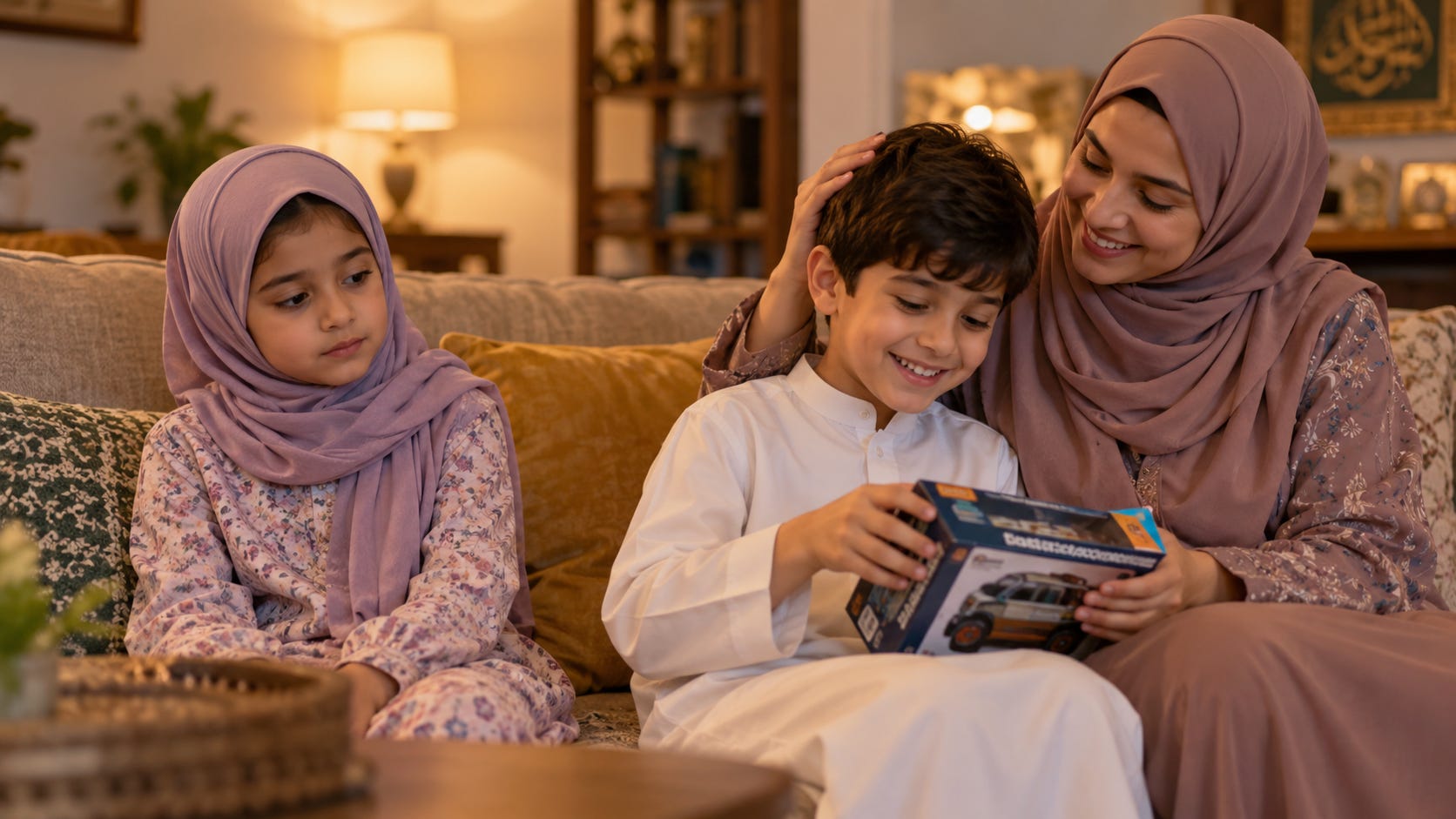
Sometimes jealousy shows up in very small moments.
One child gets praised.
Another suddenly goes quiet.
One sibling gets something new.
The other says:
“Why does he always get everything?”
As parents, we usually notice the behavior first.
But underneath it, there is often a feeling the child doesn’t know how to explain.
That is why the story of Prophet Yusuf (AS) can be such a powerful lesson for children.
Jealousy Is a Feeling. What We Do With It Matters.
Prophet Yusuf’s brothers became jealous of the love and attention they thought he was receiving.
That jealousy grew.
And because they did not handle it in a healthy way, it led them to make choices that caused pain for their family.
For children, this is an important lesson:
Feeling jealous does not make you a bad person.
But jealousy can become harmful when we let it control what we say or do.
Children Need Help Naming the Feeling
Instead of saying:
“Stop being jealous.”
Try asking:
“Did that make you feel left out?”
Or:
“Were you wishing you had that too?”
Sometimes children calm down simply because someone understands what they are feeling.
Then we can help them choose a better response.
Avoid Comparing Siblings
Even small comparisons can stay with children.
“Your brother finished first.”
“Why can’t you behave like your sister?”
We may say these things without thinking, but children often hear them as:
“They are better than me.”
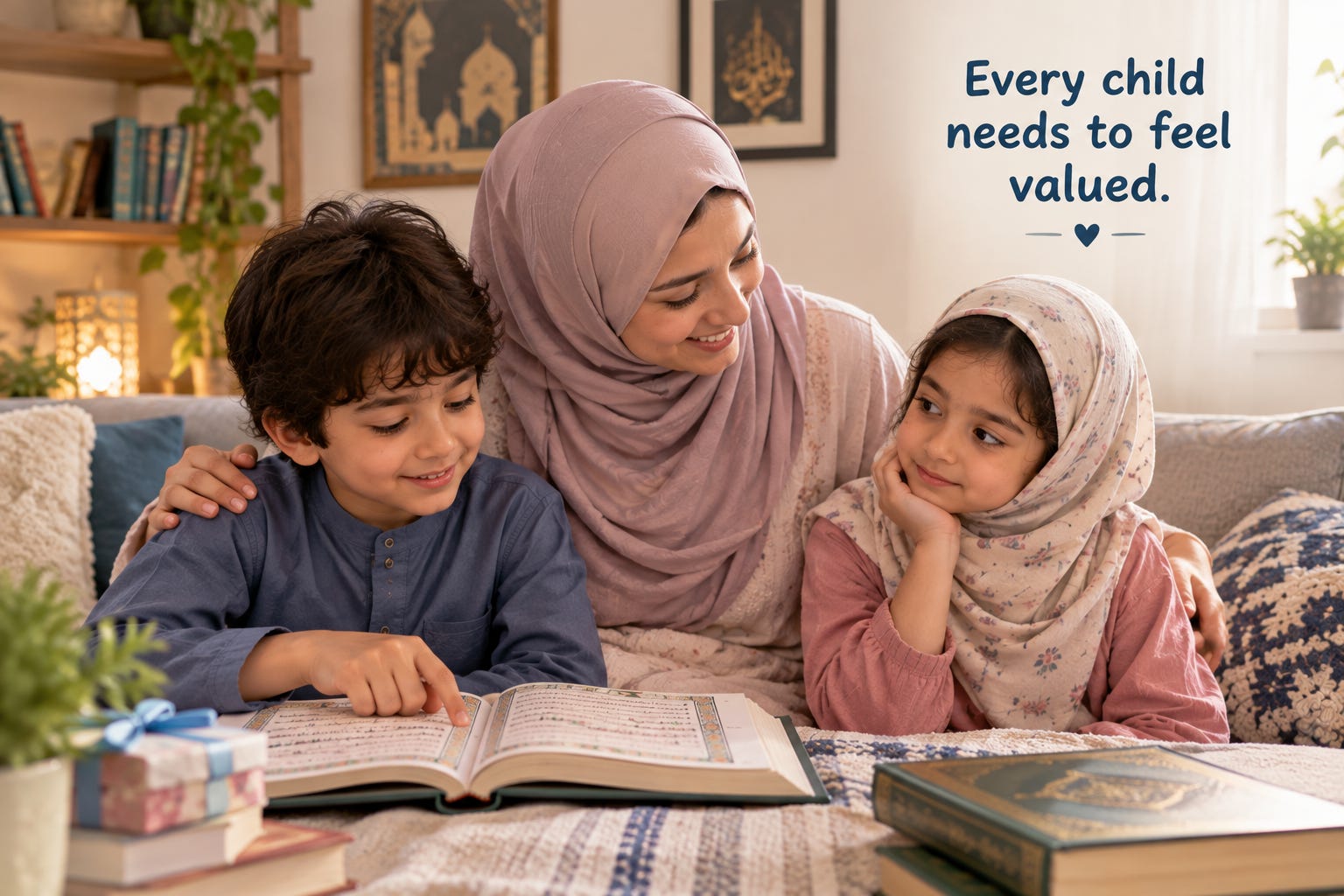
Prophet Yusuf’s story reminds us how deeply sibling relationships can be affected by comparison, jealousy, and feeling less valued.
Every child needs to know that they are loved for who they are.
And Then Comes One of the Most Beautiful Lessons
Years later, Prophet Yusuf (AS) had the power to take revenge.
But he chose forgiveness.
That may be the part children need most.
Someone else’s mistake does not have to decide how we respond.
We can choose kindness.
We can choose forgiveness.
We can choose to do better.
Try This With Your Child Tonight
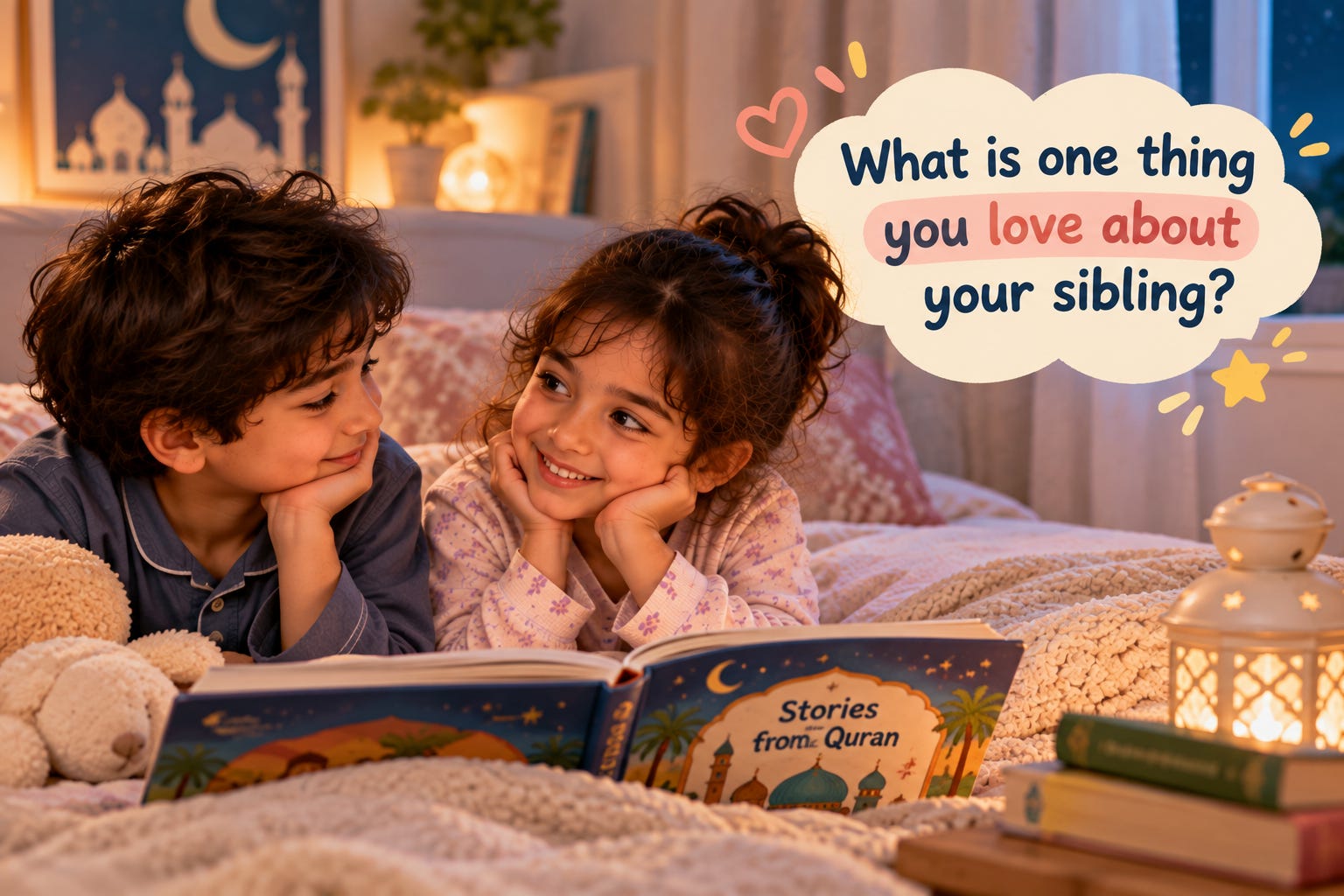
After sharing the story, ask:
“Have you ever felt jealous of someone?”
Then ask:
“What could you do next time you feel that way?”
And finally:
“What is one thing you love about your brother, sister, or friend?”
Simple conversations like these can help children connect Quranic stories with real life.
Because these stories are not only meant to be heard.
They are meant to shape how we think, feel, and treat each other.
At AlQuranClasses, we believe Quran learning should help children understand Islam, not just read the words.
Through meaningful learning, stories, and supportive teachers, children can build a stronger connection with the Quran and the lessons it carries.
Want your child to experience Quran learning in a more meaningful way?
Book a 30-minute FREE trial class with AlQuranClasses and help them begin that journey.